Digital asset trading has grown rapidly, but the basics can feel overwhelming. This guide explains how it all works.
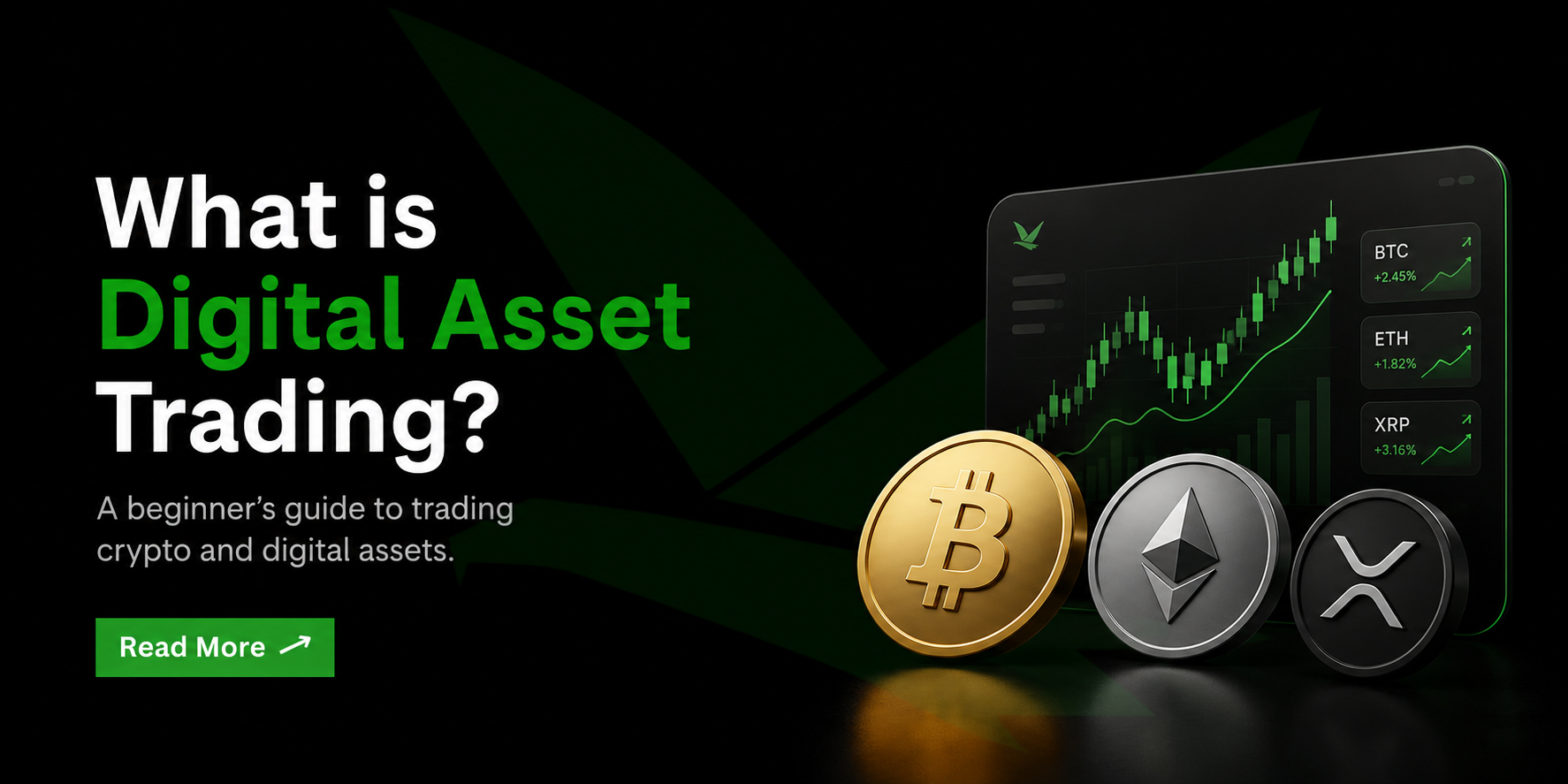
Digital asset trading has moved from a niche corner of finance into something millions of people now take part in. If you are new to it, though, the language alone can be off-putting: tokens, wallets, exchanges, custody, and a dozen other terms thrown around as if everyone already knows what they mean.
This guide explains digital asset trading in plain English. It covers what a digital asset actually is, how trading works, where you can do it, the main types and strategies, and the risks to keep in mind. By the end, you will have a clear picture of the basics, without the jargon and without any hype.
A digital asset is anything of value that exists in digital form and is recorded on a blockchain, a shared digital ledger that tracks who owns what. Ownership is secured by cryptography rather than held by a bank, which is what lets these assets be transferred quickly and across borders. The best-known examples are cryptocurrencies, but the category is broader than that.
Here are the main types you are likely to come across.
| Type | What it is |
|---|---|
| Cryptocurrencies | Digital currencies such as Bitcoin and Ethereum, used to store or transfer value |
| Stablecoins | Tokens pegged to a steady asset, usually a currency like the US dollar |
| Utility and governance tokens | Tokens that grant access to a service or a say in how a project is run |
| NFTs | Unique tokens that represent ownership of a one-of-a-kind item, such as digital art |
| Tokenized real-world assets | Tokens that represent a share of a physical asset like gold or property |
Cryptocurrencies make up the largest and most actively traded group, which is why digital asset trading and crypto trading are often used to mean the same thing. The other types, including stablecoins and non-fungible tokens, each behave differently and serve different purposes.
Digital asset trading is the buying, selling, and swapping of these assets, usually through an online platform. People trade for different reasons: some want long-term exposure to assets like Bitcoin and Ethereum, others aim to gain from shorter-term price movements, which are driven by supply and demand.
Two things set it apart from traditional markets. First, it runs around the clock. There is no opening bell and no close, so prices move at all hours, every day of the year. Second, much of it happens without the traditional middlemen, since the blockchain itself records and verifies transactions. That openness is part of the appeal, and also part of the responsibility that falls on each participant.
The mechanics are more straightforward than the jargon suggests. In practice, getting started usually involves the same handful of steps, whichever platform you use.
Behind these steps sits one idea worth understanding early: liquidity. A market with high liquidity has plenty of buyers and sellers, so trades fill quickly and close to the expected price. In a thin market, the price can move against you as your order goes through, a gap known as slippage. It is one reason the choice of where you trade matters.
Digital assets are traded in three main places, and each suits a different kind of person and goal.
| Venue | How it works | Who it tends to suit |
|---|---|---|
| Exchange | An online marketplace that matches buyers and sellers through an order book | Self-directed traders comfortable managing their own activity |
| Broker | A service that buys, sells, and stores assets for you, often with personal broker support | People who want support and a relationship rather than a self-serve app |
| OTC desk | Trades arranged directly and privately, away from public order books | Larger trades, where going through an exchange could move the price |
Exchanges come in two forms. Centralized exchanges are run by a company that holds your funds and matches trades, while decentralized exchanges let people trade directly from their own wallets using automated software.
Brokers take a more hands-on role, handling the buying, selling, and storage for you, which many people prefer when they are starting out or want support along the way. Over-the-counter desks handle larger trades privately, so a sizeable order can be filled at an agreed price without moving the open market. UpTrade operates as a broker with an over-the-counter desk, which sits in this middle ground of broker-led, relationship-based trading.
Not all trading looks the same. Broadly, it falls into a few approaches, and they differ a great deal in time, effort, and risk.
A few words come up again and again. Here is a plain-language glossary to keep handy.
| Term | What it means |
|---|---|
| Spot trading | Buying or selling the asset itself for immediate settlement |
| Market order | An instruction to trade straight away at the best available price |
| Limit order | An instruction to trade only at a price you set or better |
| Liquidity | How easily an asset can be bought or sold without moving its price |
| Slippage | The gap between the price you expected and the price you got |
| Custody | How and where your assets are held and kept secure |
| Wallet | A tool that stores the keys giving you access to your assets |
| KYC | Know your customer identity checks that regulated platforms must carry out |
Digital asset trading can be rewarding, but it carries real risks that are worth understanding before you begin rather than after.
While these risks are significant, they do not mean digital asset trading should be avoided. Instead, trade with caution, understand the products you are using, and only invest money that you are prepared to put at risk.
If you decide digital asset trading is for you, a measured start tends to serve people better than rushing in. A few sensible principles apply. Learn the basics first, which you are already doing. Begin with established assets and only a small amount you can afford to lose. Use a reputable, regulated platform. Take security seriously from day one. And keep your own goals, rather than the noise of the market, at the center of your decisions.
It also helps to have support. Working with a broker means you can ask questions and talk through decisions with a real person rather than navigating everything alone.
Prefer a hands-on start? At UpTrade, clients work with a dedicated broker and have access to research from an in-house team. You can book a free consultation to talk through how digital asset trading could fit your goals.
Once you understand the basics, the next step is choosing where to trade. UpTrade is a dedicated crypto brokerage built around real relationships, not a self-serve app you navigate alone.
UpTrade is an AUSTRAC-registered digital currency exchange provider (DCE100856266-001). You can read more about registered providers at austrac.gov.au.
This article is for general informational purposes only and does not constitute financial, investment, or tax advice. Cryptocurrency investments carry significant risk, including the possible loss of principal. Past performance is not indicative of future results. UpTrade does not make investment recommendations based on your personal financial circumstances. You should conduct your own research and seek independent financial advice before making any investment decisions.
General information only. This article is for educational purposes and does not constitute financial, investment, legal or tax advice, nor a recommendation to buy, sell or hold any asset. Cryptocurrency is a high-risk asset and you should consider your own circumstances and seek independent advice before making any decision. UpTrade does not make price predictions.

Market updates, new explainers and the occasional Alpha Pro report, sent once a week. Unsubscribe anytime.