
Weekly Market Update: 25 March 2026


Ceasefire Hopes, Wall Street On-Chain, and AI Takes the Lead
This week the crypto market navigated a volatile mix of geopolitical whiplash and landmark institutional developments. Bitcoin held the high $60Ks to low $70Ks as US-Iran ceasefire talks swung between ultimatum and cautious optimism, keeping risk assets in a holding pattern. The broader market slipped lower with most tokens giving back recent gains, though a select group of alts showed genuine strength and decoupled from the noise. AI tokens led all sectors by a wide margin, while the case for 24/7 on-chain markets continued to build, validated by both record Hyperliquid volume and Wall Street's first moves onto blockchain rails.

Bittensor and the Sector Rotation
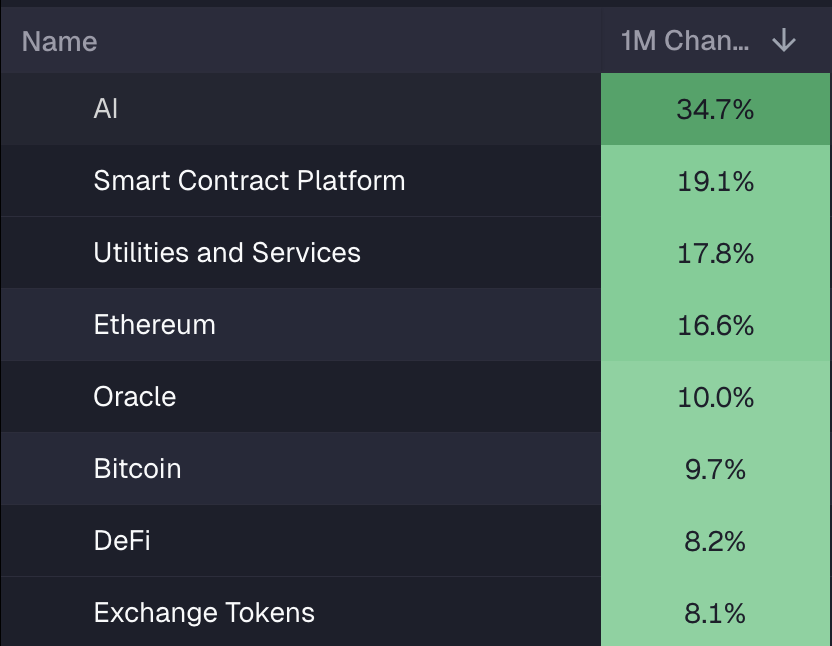
The sector performance data tells a clear story this week, AI is the standout performer across all of crypto, up 34.7% on a weighted average basis, outperforming every other sector. The weakest sectors, RWA, DePIN, and Gaming are down on the week. Leading the charge is Bittensor, TAO is up 16% on the week and 80% on the month, making it one of the strongest performers in the entire top 100. FET is also up 49% on the month, confirming this isn't a single token story but a genuine sector rotation.
In December 2025, Bittensor underwent its first token halving, cutting new TAO emissions in half. Historically, halving events reduce sell pressure from miners and validators, tightening available supply at exactly the moment demand begins building. Combined with Bittensor's subnet architecture, where independent AI networks compete and are rewarded based on performance, creating a genuinely decentralised machine learning marketplace, the protocol has a compelling fundamental case that goes well beyond narrative. Each subnet functions as a specialised AI model competing for TAO emissions, meaning the more useful the network becomes, the more demand for the token. TAO has now broken through the key $300 resistance level that had been capping the rally, with some analysts eyeing a move toward the top of the range at $500.
Hostplus — A Turning Point for Australian Super
Hostplus, one of Australia's largest pension funds managing over A$150 billion, is preparing to give members exposure to Bitcoin and other cryptocurrencies through its self-directed platform, ChoicePlus. If approved, the offerings could go live as early as next financial year and rather than integrating digital assets into its default balanced funds, Hostplus would offer crypto strictly through ChoicePlus, which currently accounts for roughly 1% of the fund's total assets under management. The significance of this shouldn't be understated, Australia's superannuation sector manages approximately $4.5 trillion in assets and as soon as one super fund breaks ranks on crypto assets, there is a high probability the rest follow. The push is being driven by rising member demand, particularly from a younger demographic with an average age in the mid-to-late 30s who have directly requested access to cryptocurrency investments. The shift also mirrors what is already happening globally in the United States with Donald Trump signing an executive order permitting cryptocurrencies within 401(k) retirement plans. Australia has historically been cautious, but an outright integration by a heavyweight like Hostplus would mark a significant turning point and one that positions crypto not as a fringe asset class, but as a legitimate component of long-term retirement savings for millions of Australians.
Circle's Worst Day on Record. Tether Makes History.
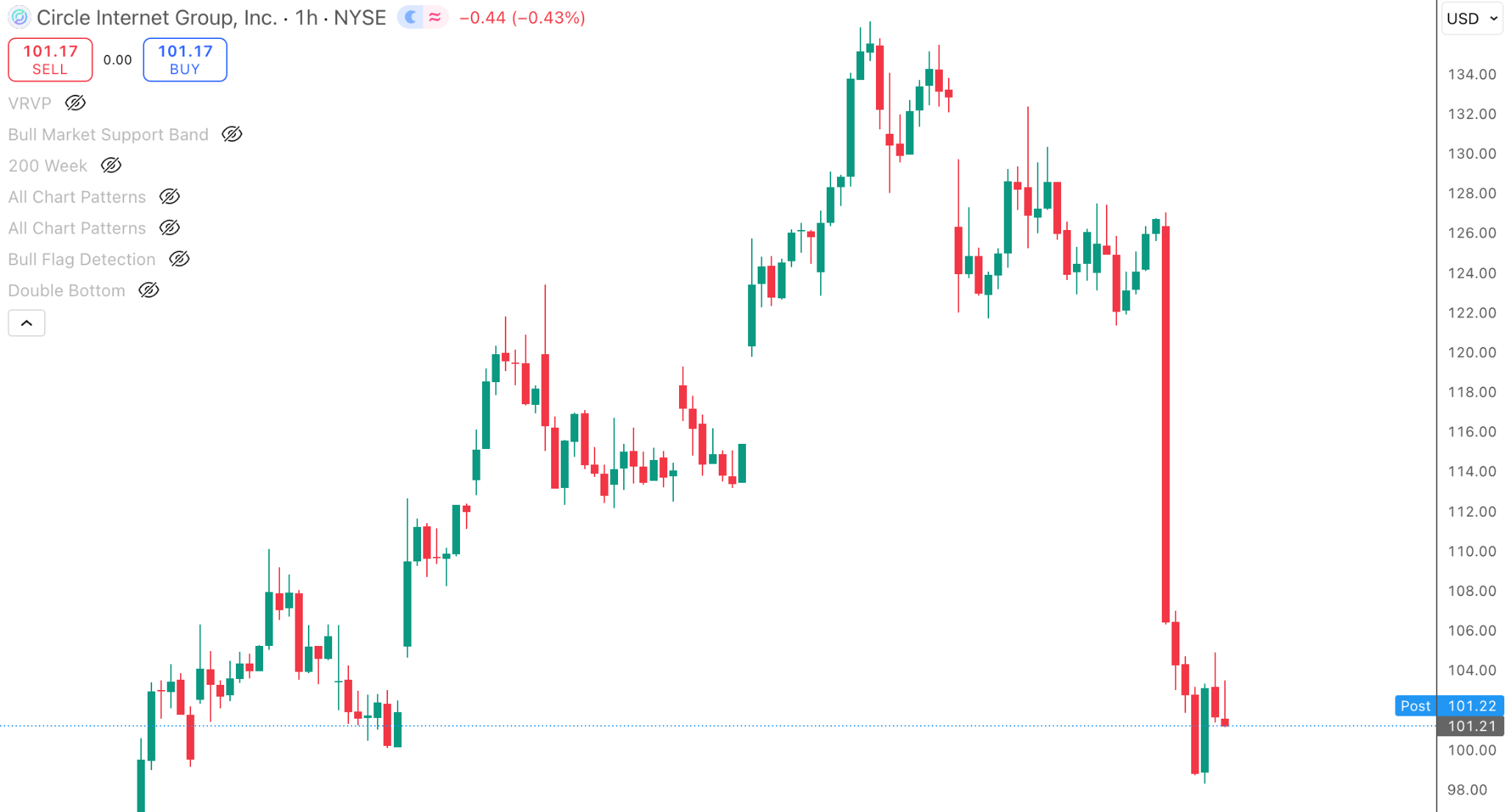
Circle shares dropped over 16% on Tuesday, its worst single day since its June 2025 IPO after a draft version of the US Clarity Act proposed banning yield on passive stablecoin balances. In simple terms, the legislation would prevent the model Circle and Coinbase rely on, where Circle earns interest on the Treasury reserves backing USDC and shares a portion with Coinbase, which funds the yield users receive. Coinbase fell over 9% on the same news. Worth noting though, Circle is still up over 30% year to date even after the drop, and the bill's final language is far from settled.
In the background, Tether made a quietly significant move. The issuer of USDT, the world's largest stablecoin at a $184 billion market cap has hired a Big Four accounting firm to conduct its first ever full formal audit of its reserves. This is a big deal. Tether has operated for years under persistent scrutiny, providing only quarterly attestations rather than a full independent audit. A proper audit examines the composition, quality, and liquidity of those reserves in forensic detail, putting Tether's claims about its Treasury holdings under independent review for the first time. If it clears, it closes one of the last remaining credibility gaps between Tether and Circle, and could meaningfully shift how institutional capital allocates across stablecoins.
US-Iran War — A Volatile Week
The week opened with Trump issuing a 48-hour ultimatum on Truth Social, open the Strait of Hormuz fully or face strikes on Iranian power plants and energy infrastructure. Iran responded by calling his bluff, moving to further restrict the strait and demanding tariffs for safe passage. Markets braced for escalation.
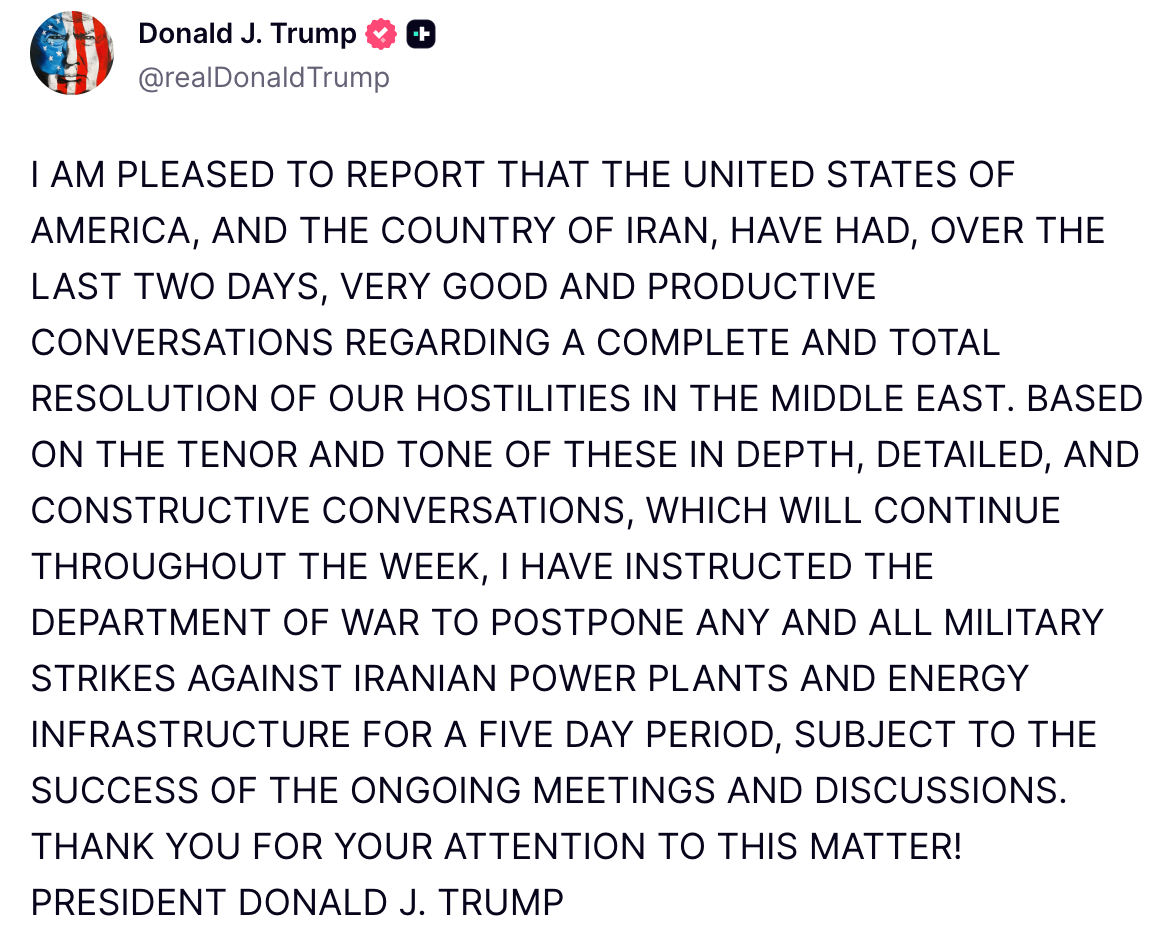
Then the tone shifted completely. Trump posted that the US and Iran had held "very good and productive conversations" toward a full resolution of hostilities, ordering the Pentagon to pause all strikes on Iranian energy infrastructure for a five-day window. Markets moved instantly, S&P 500 futures surged, oil dropped sharply, and Bitcoin jumped above $71,000 within minutes. The episode also drew controversy — a $1.5 billion S&P 500 futures trade was placed minutes before Trump's post, generating tens of millions in profit in a very short window and raising serious questions about the timing.
Iran then denied everything. Iranian state media cited a senior security official saying direct or indirect talks had not taken place, adding that psychological warfare would not reopen the Strait or bring peace to energy markets. Bitcoin retreated back under $70,000 as the denial emerged, with gains partially unwound.
Today brought some incremental progress, a potential one-month ceasefire appears to be taking shape, but it comes with a 15-point agreement that both sides need to work through. That's not nothing, but it's also far from the clean resolution markets are hoping for. The situation remains murky, neither side has confirmed anything formally, and with 15 clauses still on the table, there are plenty of points where talks could stall. A confirmed deal would be a meaningful catalyst for risk assets. Until then, the market remains in a holding pattern, pricing in cautious optimism rather than certainty.
NYSE Goes On-Chain. Hyperliquid Already Beat It There.
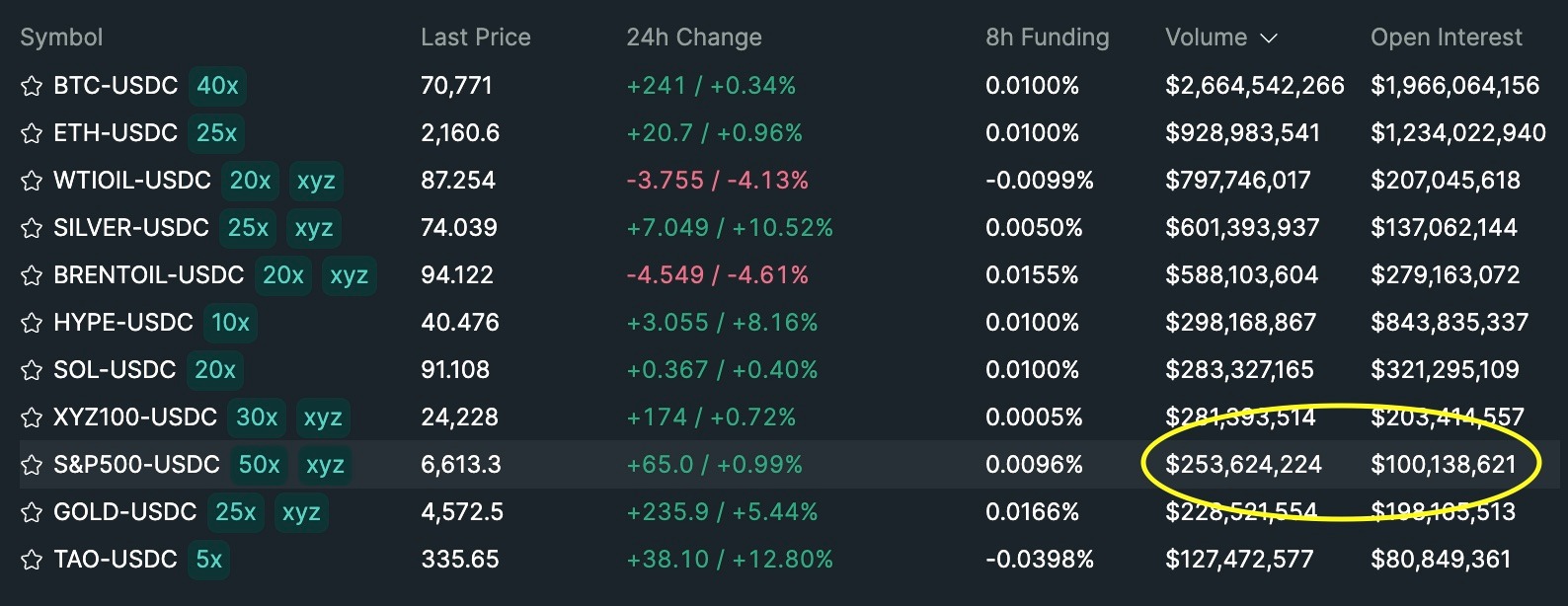
The New York Stock Exchange has signed a Memorandum of Understanding with BlackRock-backed Securitize, naming it the first digital transfer agent to mint tokenised stocks and ETFs on NYSE's upcoming Digital Trading Platform, pending SEC and FINRA approval, with a late 2026 timeline. The platform is designed to enable 24/7 trading of US-listed equities and ETFs with instant settlement, stablecoin funding, and fractional share purchases. The key distinction from every existing tokenised stock product is shareholder rights, tokenised holders on NYSE's platform retain full voting rights and dividends, something offshore tokenised stock products currently cannot offer as they function as derivatives rather than genuine securities. Nasdaq has also obtained regulatory approval for its own tokenised stock framework. The direction of travel across Wall Street is now unambiguous and Hyperliquid's S&P 500 perpetual, which did $100 million in volume within days of launch, already proved the demand exists. Traditional finance is building toward something crypto-native platforms have been running for months.
Hyperliquid's First-Mover Advantage Holds
While Wall Street is still seeking regulatory approval, Hyperliquid is already doing it at scale. This week, HIP-3, Hyperliquid's permissionless framework for listing perpetuals on any asset recorded its highest ever weekly volume, accounting for more than 50% of total platform volume for the first time. The S&P 500 perpetual launched just last week via the official S&P Dow Jones Indices and TradeXYZ partnership, and volume in its first days has already validated the demand. Oil and equity contracts held deep liquidity through one of the most volatile geopolitical periods in recent memory, when the Iran conflict escalated over weekends and traditional exchanges sat dark, traders flooded Hyperliquid as the only venue processing real price discovery in real time. Bloomberg used its oil perp for risk assessment pricing. That is not a crypto story anymore, that is market infrastructure.
NYSE's platform targets late 2026. By the time the regulated version arrives, Hyperliquid will have spent another year building the liquidity moat, the open interest, and the institutional attention that first-mover advantage compounds. Traditional finance is not disrupting crypto here. It is catching up to it.
Altcoin Selection Masterclass: How to Find Quality Before It Trends
Are you tired of discovering altcoins after they've already made their move? This is the challenge most crypto investors face, and it's exactly what our upcoming free webinar is designed to solve.
On Thursday, 26 March at 10:00 AM AEST, UpTrade and Mastering the Markets are teaming up to deliver a live 60-minute masterclass focused on one of the most valuable skills in crypto investing: identifying quality altcoins before the crowd catches on.
.png)
What to Expect
This isn't a hype session. Our speakers will walk you through a practical, research-driven framework for evaluating altcoins, cutting through the noise to focus on what actually matters when separating long-term winners from short-lived pumps.
You'll come away with a clearer understanding of what signals to look for, how to assess a project's fundamentals, and how to build a more disciplined approach to altcoin selection.
Meet Your Speakers
- David Bird — Founder & Head of Education at Mastering the Markets, bringing years of experience breaking down complex market concepts into actionable strategies.
- George Kaltekis — Broker Team Lead at UpTrade, with deep expertise in market execution and crypto trading dynamics.
- Kane Bisogni — Head of Research & Analytics at UpTrade, specialising in on-chain data and project evaluation frameworks.
Who Should Attend?
Whether you're new to crypto and want to build solid research habits from the start, or you're an experienced investor looking to sharpen your altcoin selection process, this session is designed to deliver real, practical value.
It's completely free, sign up at uptradealpha.com to reserve your spot
General information only. This article is for educational purposes and does not constitute financial, investment, legal or tax advice, nor a recommendation to buy, sell or hold any asset. Cryptocurrency is a high-risk asset and you should consider your own circumstances and seek independent advice before making any decision. Uptrade does not make price predictions.
Kane leads our international research division, delivering clear, actionable insights into crypto markets and emerging investment opportunities. A true “crypto native,” he has over seven years of hands-on experience, formal qualifications in finance and economics, and has worked across Web3 hedge funds, venture capital, and leading incubators.
View all articles by Kane