
Weekly Market Update: 25 February 2026


No Relief as Sell-off Continues
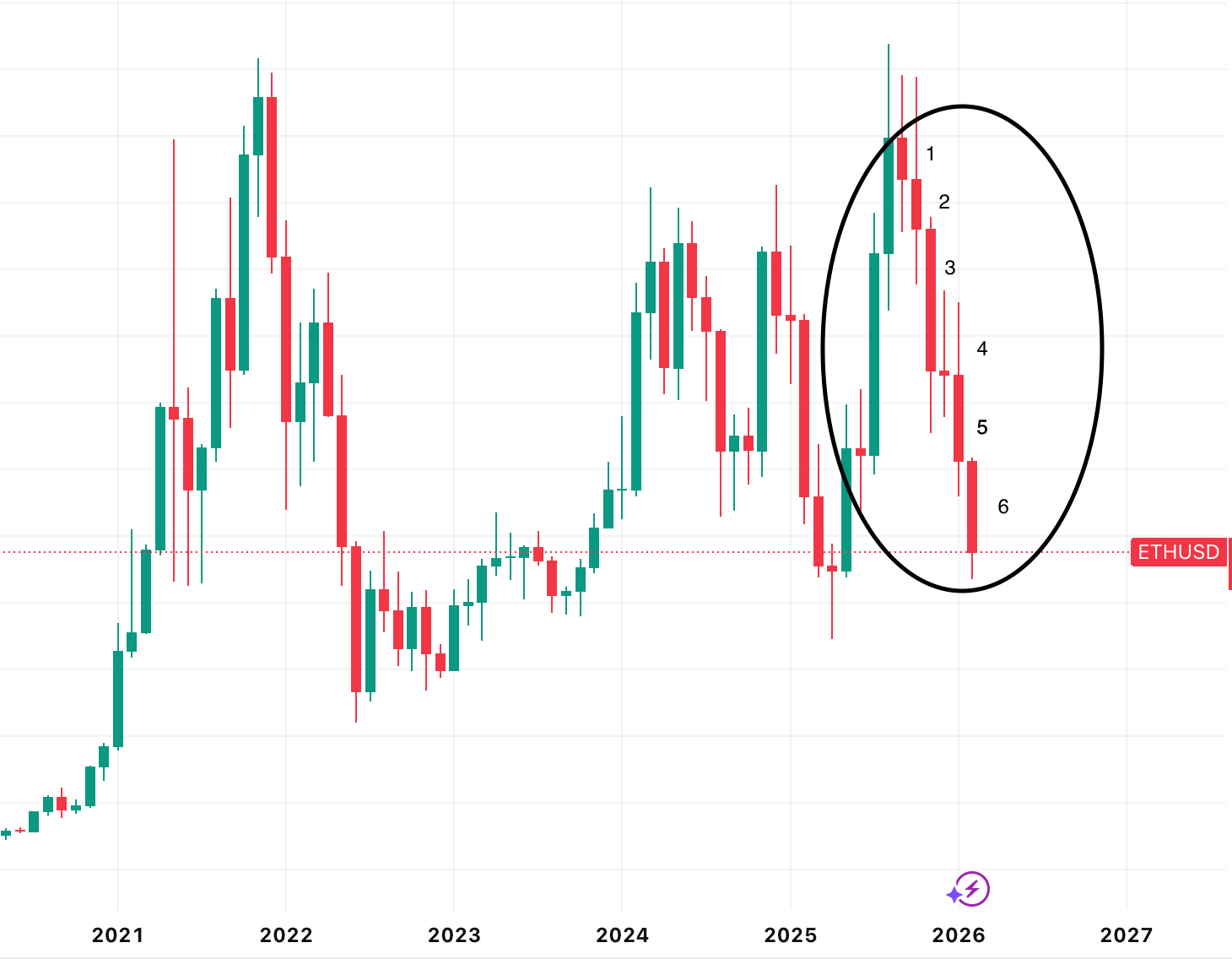
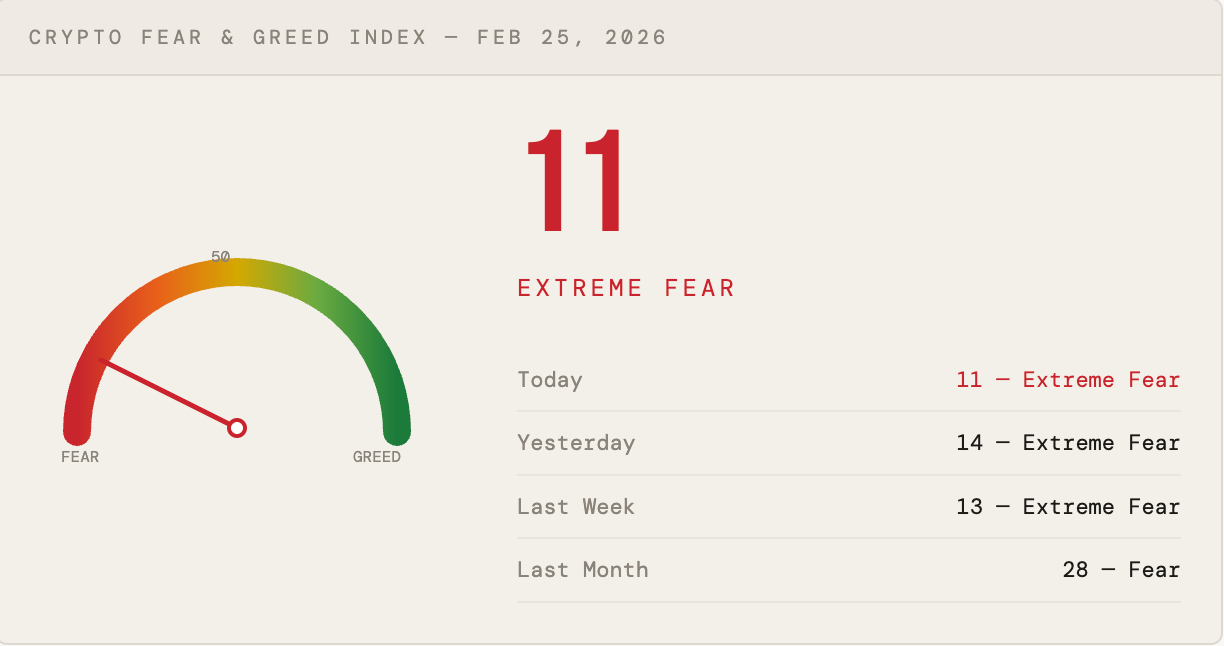
It has been a rough week. Bitcoin is trading around $63,000, down roughly 4.5% this week and more than 50% from its all-time high of $126,000 reached in early October 2025. Ethereum fared worse, falling 5.5% over the same stretch to test the $1,800 psychological level and logging six consecutive months of negative returns, the longest streak Bloomberg has tracked since 2018. The Crypto Fear & Greed Index sits at 11, Extreme Fear, nearly identical to where it stood last week. For context, readings below 20 have historically marked capitulation territory. That doesn't guarantee a bottom, but it does mean most retail participants are already running scared.
The institutional picture is equally grim. U.S. spot Bitcoin ETFs have bled nearly $4.5 billion in net outflows year-to-date, the bulk concentrated in a five-week stretch beginning late January. BlackRock's IBIT alone shed over $2.1 billion. Total Bitcoin ETF assets under management have collapsed from a peak of $170 billion in October 2025 to around $84 billion today. ETF holders are not buying this dip. They are the dip.
While most institutional money heads for the exits, both Strategy (MSTR) and Bitmine (BMNR) are doubling down. Strategy now holds 717,722 BTC at an average cost of $76,020 per coin, currently underwater by an estimated $4.5 billion mark-to-market. The stock is down 62% from its highs, and the company reported a staggering $12.44 billion net loss in Q4 2025. Despite all of this, CEO Michael Saylor keeps buying.
Bitmine, chaired by Fundstrat's Tom Lee, is running the identical playbook for Ethereum. As of February 22, the company holds 4,422,659 ETH (3.66% of all ETH in existence) with 3.04 million actively staked, generating annualized revenue of roughly $171 million. Total Bitmine ETH portfolio sits at $8.6 billion. Bitmine Immersion Technologies shareholders have now accumulated over $8 billion in paper losses on Ethereum, surpassing the roughly $8.0 billion FTX customers initially lost when that exchange collapsed in 2022.
Both firms are making a long-duration macro bet. Whether it pays off depends entirely on where crypto goes from here.
.png)
MORPHO - Leading the Institutional DeFi Pivot
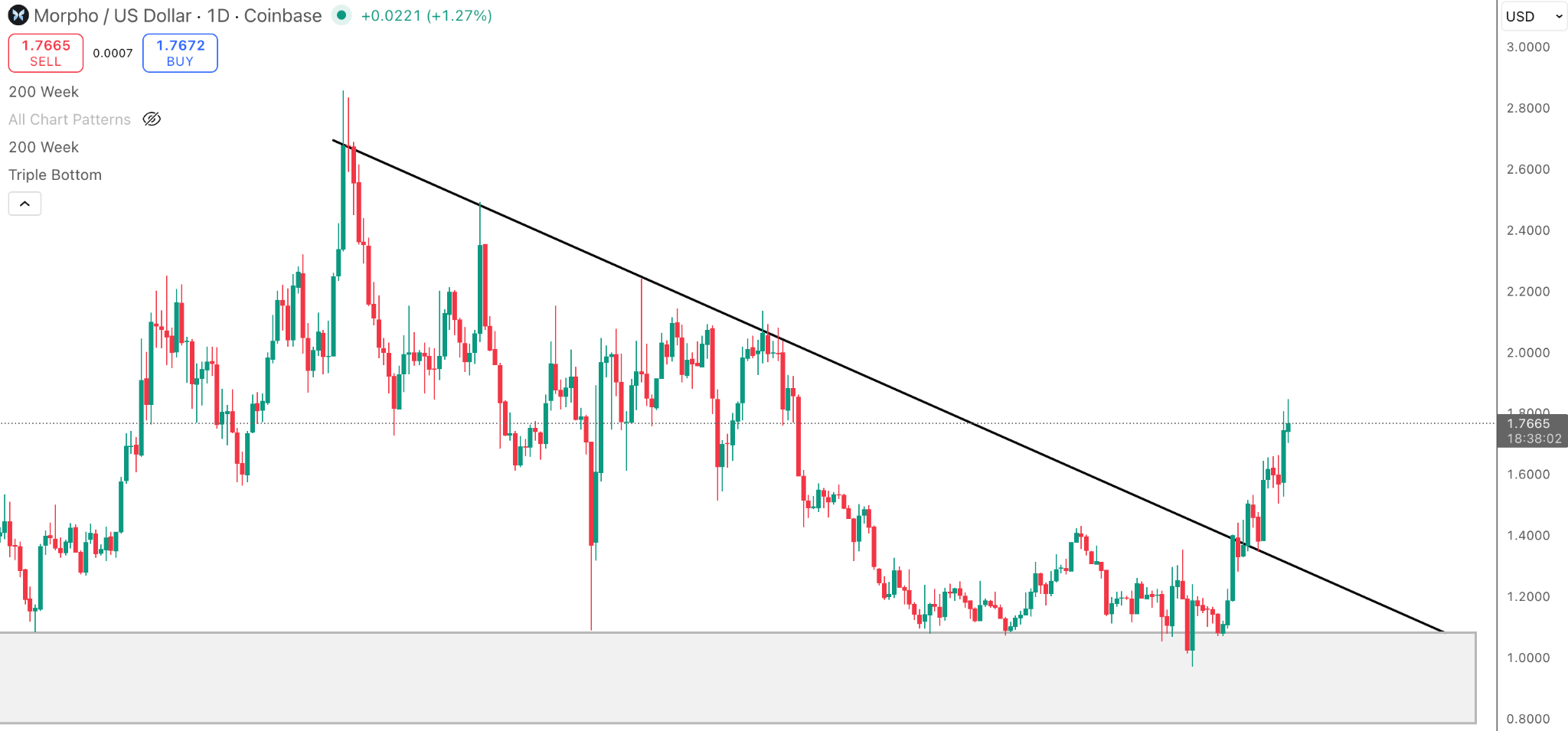
Uptrade Alpha successfully flagged Morpho last week as it broke out at $1.35, a key level where our technical and fundamental research perfectly aligned. Since then, the token has rallied 35%, significantly outperforming the broader market. Morpho is a rising DeFi powerhouse that specialises in peer-to-peer lending, allowing for significantly higher yields by matching lenders and borrowers directly. Beyond retail use, Morpho is increasingly becoming the preferred back-end infrastructure for institutional giants, Coinbase now uses Morpho to power its USDC lending, and Revolut is leveraging the same rails for its 70M+ users. With thriving on-chain metrics, including over $4.5B in active loans and constructive technicals verified by Dave, ASX trader from Mastering the Markets, Morpho remains a top pick and a testament to our research team's ability to catch institutional rotations early.
The AI "Scare Trade"
A new kind of fear is rippling through the market, dubbed the "AI Scare Trade." For years, big software and cybersecurity companies charged premium prices because their work was thought to be too complex for machines. That changed this week when Anthropic unveiled Claude Code Security, a tool that can autonomously scan and fix software flaws, work that usually requires high-paid experts. The reaction was immediate: major software ETFs have plummeted 27% this year, pacing for their worst drop since the 2008 financial crisis, as investors fear these legacy companies are being automated away. Then on Monday, Anthropic doubled down: Claude Code can modernize COBOL codebases in quarters instead of years. COBOL is a 1950s language that still runs an estimated 95% of U.S. ATM transactions. Updating it has historically required years of expensive consulting work. IBM posted its worst single day since October 2000, shares down over 13%, with $31 billion in market cap gone in one session.

Smart contract auditing is one of crypto's highest-margin service businesses, a handful of firms charging $50,000 to $500,000 to manually review code before protocols go live. That model is already under pressure. Trail of Bits, QuillAudits, and others have released Claude Code plugins for automated smart contract scanning, and OpenAI this week dropped EVMbench, a benchmark showing AI agents can now detect, exploit, and patch vulnerabilities across 120 real-world contract audits.

When zooming out, the bigger story is actually constructive for crypto. The reason exploits and rug pulls have historically been so common is that proper security has been expensive and scarce. A $150,000 audit was a barrier most small protocols simply couldn't clear, so they launched unaudited. If AI brings that cost down, security stops being a luxury reserved for well-funded teams and becomes table stakes for anyone deploying code.
Crypto's reputation problem has never really been about the technology, it's been about the environment around it. Bad actors, unaudited contracts, anonymous founders, zero accountability, and retail investors left exposed after each exploit. Cheaper, accessible security tooling won't fix bad actors, but it raises the floor on every legitimate project that actually wants to get it right. Over time, that shifts the composition of the industry. Protocols that survive aren't the ones that moved fastest and cut corners on security, they're the ones that treated it seriously from day one.
The Tariff Whiplash
This week's macro, Trump signed a new 10% global tariff under a different statute. By Saturday morning it was 15%, posted on Truth Social, the legal ceiling of what Section 122 allows. The EU, UK, and South Korea immediately began reassessing trade deals. New court challenges were filed by the weekend. The policy floor shifted twice in 24 hours, and markets had no clean signal to price off of.

The market reacted aggressively to the news with Bitcoin falling below $63,000 on Tuesday, S&P 500 futures dropping 0.3%, and Nasdaq futures sliding 0.4%. The mechanism is simple: tariff uncertainty raises inflation expectations, pushes the Fed toward staying higher for longer, tightens global financial conditions, and hits leveraged risk assets hardest. Crypto, trading 24/7 with no circuit breakers, absorbs that pressure faster and harder than anything else in global markets.
Founder Sells Ethereum + Jane Street $40B Allegation
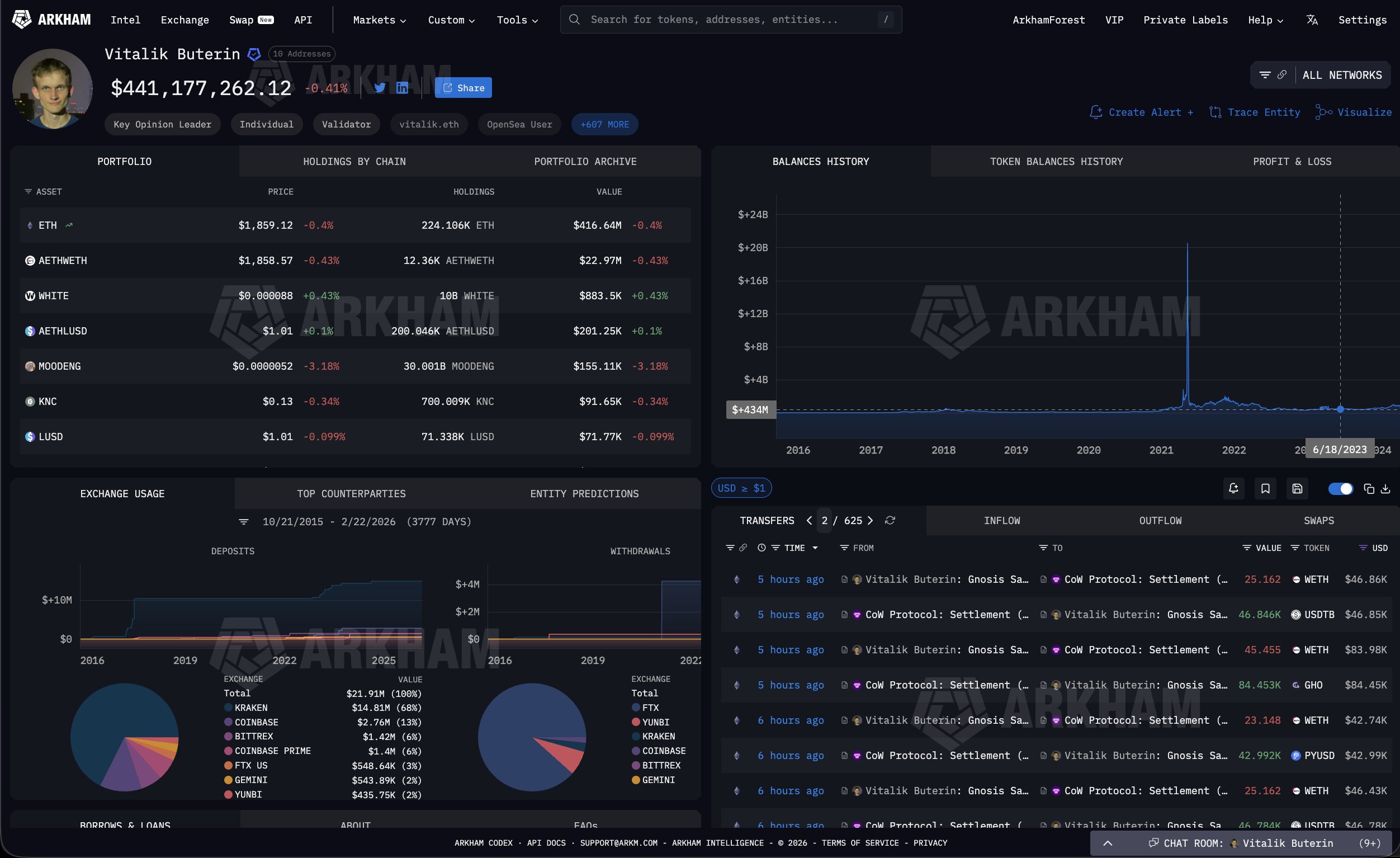
The Ethereum market is currently facing a double dose of supply pressure that has investors on edge. First, Ethereum co-founder Vitalik Buterin has sold roughly 17,000 ETH ($35M+) throughout February. While the founder selling sounds scary, he publicly explained that this is a planned move to personally fund the Ethereum Foundation’s development during a period of "mild austerity" (basically, a period of tighter budgeting). While his sales are a tiny fraction of total trading, it creates a psychological cloud over the price while the market is already weak.
Adding to the tension, a ghost from the past has returned. The team handling the bankruptcy of Terraform Labs (the project behind the massive 2022 crypto crash) is now suing Wall Street giant Jane Street for $40 billion. They allege that Jane Street used insider information to dump a huge amount of Terra’s stablecoin just minutes before the crash became public, essentially triggering the death spiral that wiped out billions in investor wealth. Jane Street calls the claims desperate, but the case is a major reminder to investors that the legal fallout from the last cycle is far from over and could reshape how big banks interact with crypto in the future.
Crypto Company To Be Exposed for Insider Trading
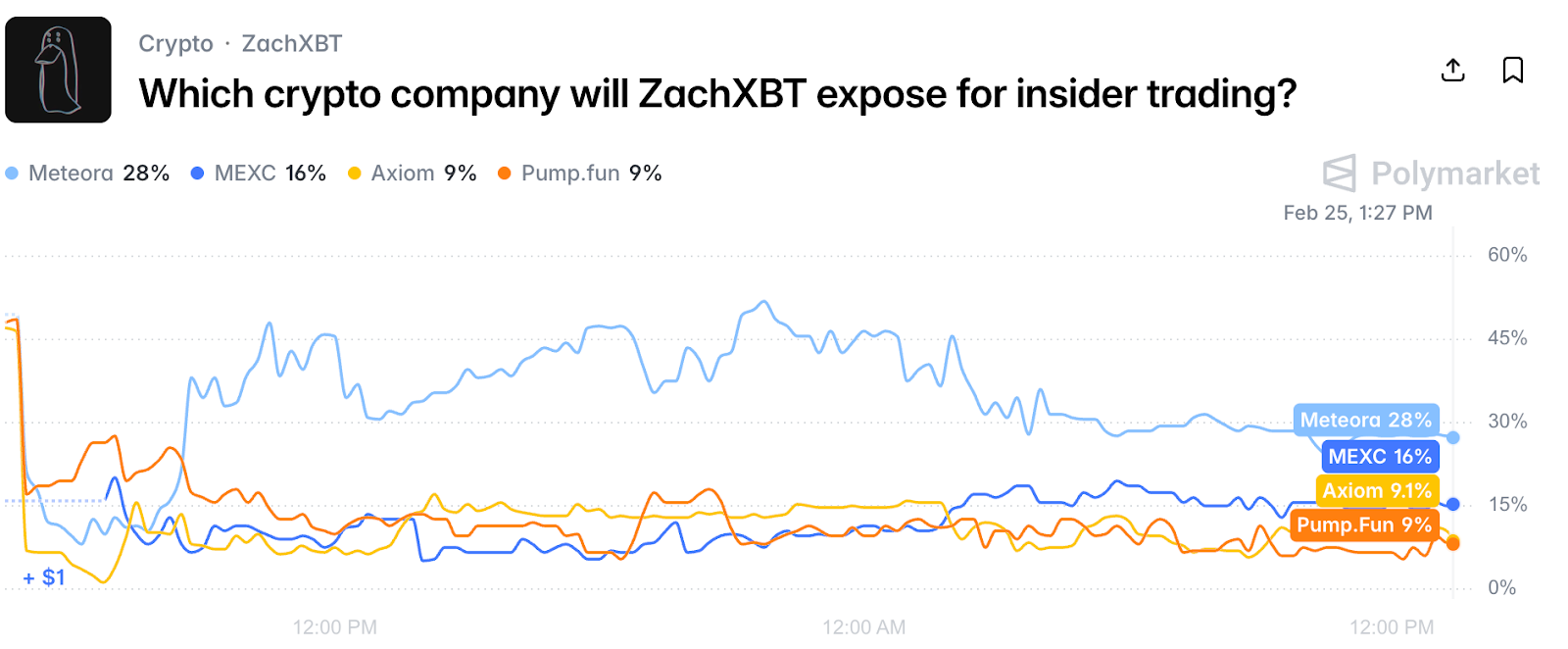
All eyes are on February 26, as famous blockchain investigator ZachXBT prepares to drop a major report exposing insider trading at a highly profitable crypto company. This means employees are being accused of using private company information to make unfair profits, a serious issue that can crash a project's reputation and price overnight. The anticipation is so high that over $9 million has been wagered on the outcome via the prediction site Polymarket. Currently, the primary target of these speculators is Meteora, a Solana-based protocol, which has already seen its price drop 15% as nervous investors de-risk. Other names like MEXC, WLFI, and PUMP are also heavily discussed in the rumor mill. We expect high volatility around this announcement, but also tokens like PUMP could see a relief bounce if they are cleared of involvement, a setup the Alpha team has been tracking in our private channels.
General information only. This article is for educational purposes and does not constitute financial, investment, legal or tax advice, nor a recommendation to buy, sell or hold any asset. Cryptocurrency is a high-risk asset and you should consider your own circumstances and seek independent advice before making any decision. Uptrade does not make price predictions.
Kane leads our international research division, delivering clear, actionable insights into crypto markets and emerging investment opportunities. A true “crypto native,” he has over seven years of hands-on experience, formal qualifications in finance and economics, and has worked across Web3 hedge funds, venture capital, and leading incubators.
View all articles by Kane