
Weekly Market Update: 18 March 2026


Eight Green Days and Counting
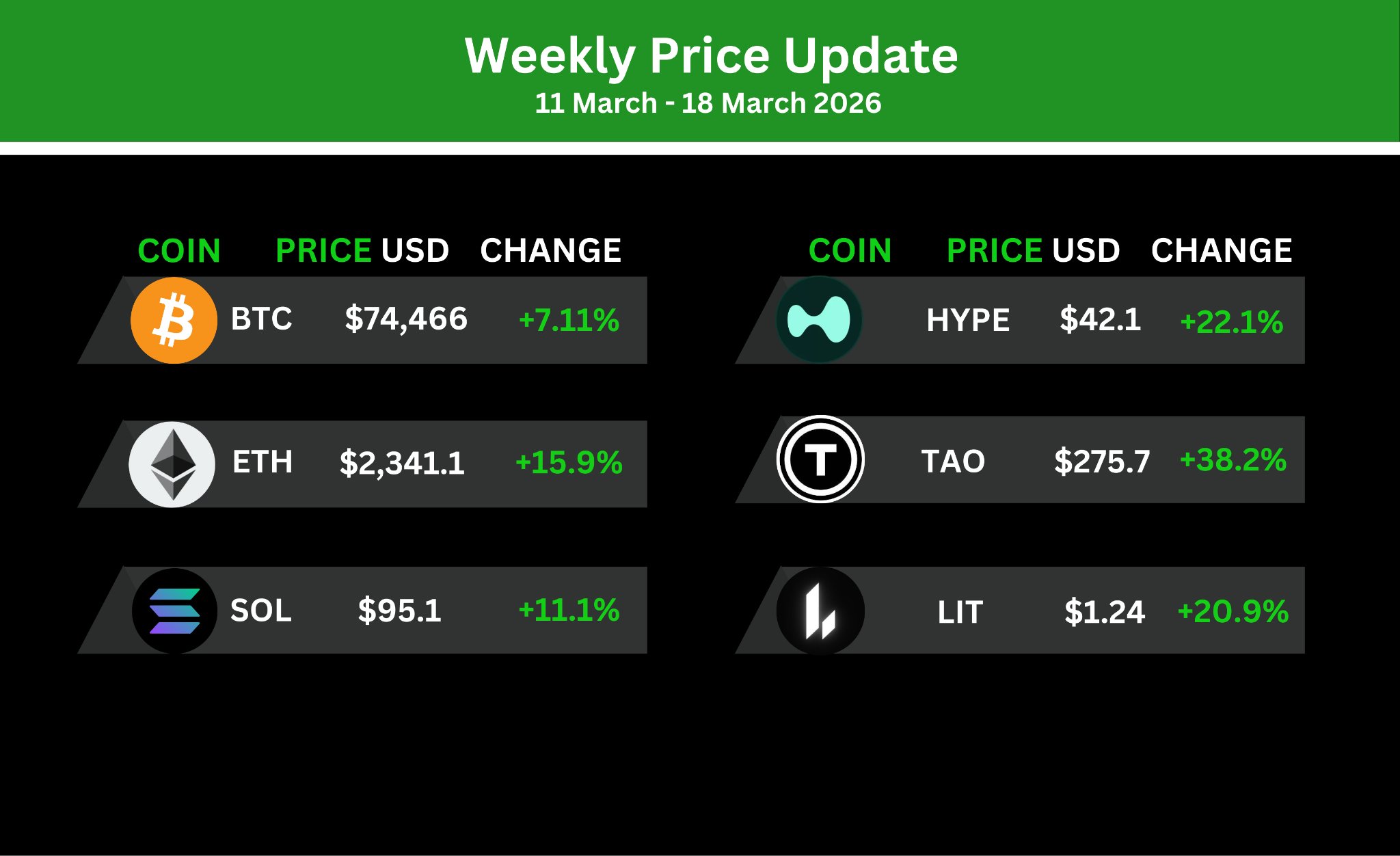
This week's crypto market opened on a bullish note, with Bitcoin climbing to $76,000, Ethereum holding steady above $2,300, and the total cryptocurrency market capitalisation sitting comfortably around $2.6–2.7 trillion. Adding to the positive momentum are strong regulatory guidance signals providing much-needed clarity for the industry, alongside strong institutional activity. Most notably Michael Saylor’s Strategy continued its aggressive Bitcoin accumulation with another massive weekly purchase (22,337 BTC for ~$1.57 billion at ~$70,194 per bitcoin) funded largely through STRC preferred stock sales.
SEC & CFTC Drop Landmark Guidance: Most Crypto Assets Are Not Securities
In a major shift for the U.S. crypto industry, the SEC and CFTC released joint interpretive guidance declaring that “most crypto assets” are not securities. This provides long-sought regulatory clarity after years of uncertainty and enforcement actions under the previous administration. SEC Chair Paul Atkins emphasised that the framework, grounded in existing law and informed by public input, recognises what prior leadership refused to acknowledge: the asset itself is rarely the security, the surrounding investment contract often is. The document outlines a clear taxonomy for digital assets and explicitly addresses activities like staking, airdrops, Bitcoin mining, and wrapping tokens, stating they generally do not constitute securities transactions.
The guidance introduces five practical categories:
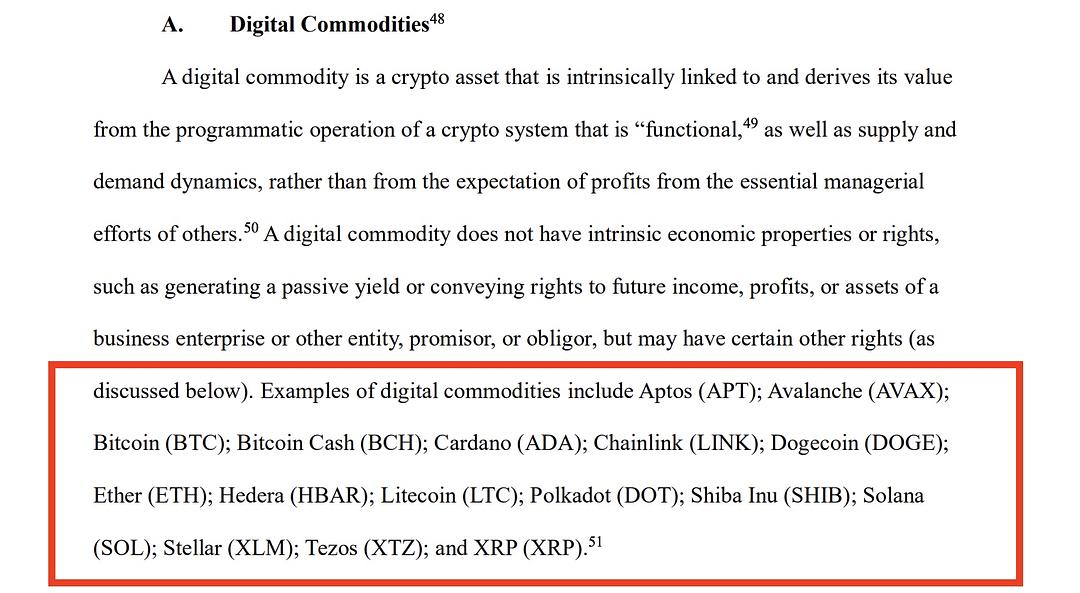
- Digital Commodities — Functional, decentralised assets such as BTC, ETH, SOL, XRP, ADA, and DOGE (named in the document) that operate as commodities once sufficiently decentralised.
- Digital Collectibles — Including NFTs, meme coins, and in-game items (with potential exceptions for fractionalised versions).
- Digital Tools — Such as membership tokens, credentials, or domain names like ENS.
- Stablecoins — Payment stablecoins under frameworks like the GENIUS Act are not securities, though others may vary.
- Digital Securities — Tokenised traditional assets, like stocks or bonds, which remain securities.
An offering may start as a security if promoters make specific promises of managerial efforts for profits, but once those promises are fulfilled and the network becomes decentralised, the asset transitions to a commodity (as seen with XRP post-launch). The joint nature of the document signals cooperation, covering the SEC's vast capital markets alongside the CFTC's derivatives oversight. It effectively delivers many benefits of proposed legislation like the CLARITY Act through regulatory means, lifting much of the industry out of the grey market while preserving a path for full legislation to make gains permanent.
This development marks one of the most significant steps toward mainstream legitimacy in crypto's history. It removes enforcement overhangs for developers, exchanges, and users, ending threats over Ethereum staking or geo-blocked airdrops, and positions the U.S. as welcoming innovation alongside traditional finance. While not a substitute for congressional action, it sets a pro-innovation tone that could influence global regulators. The market has responded positively, viewing it as a foundational win that treats crypto as a mature asset class rather than an existential threat.
The Token the Institutions Are Quietly Loading
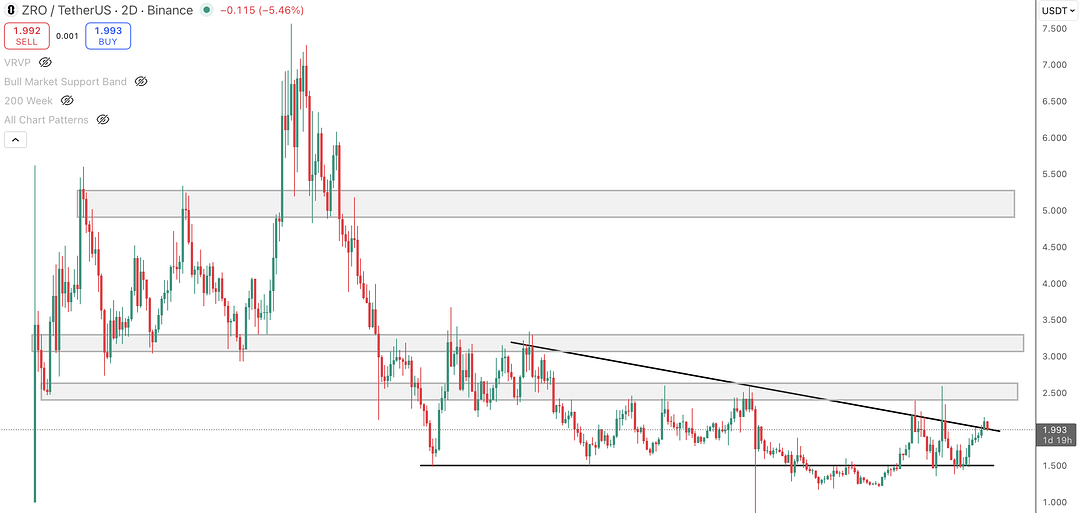
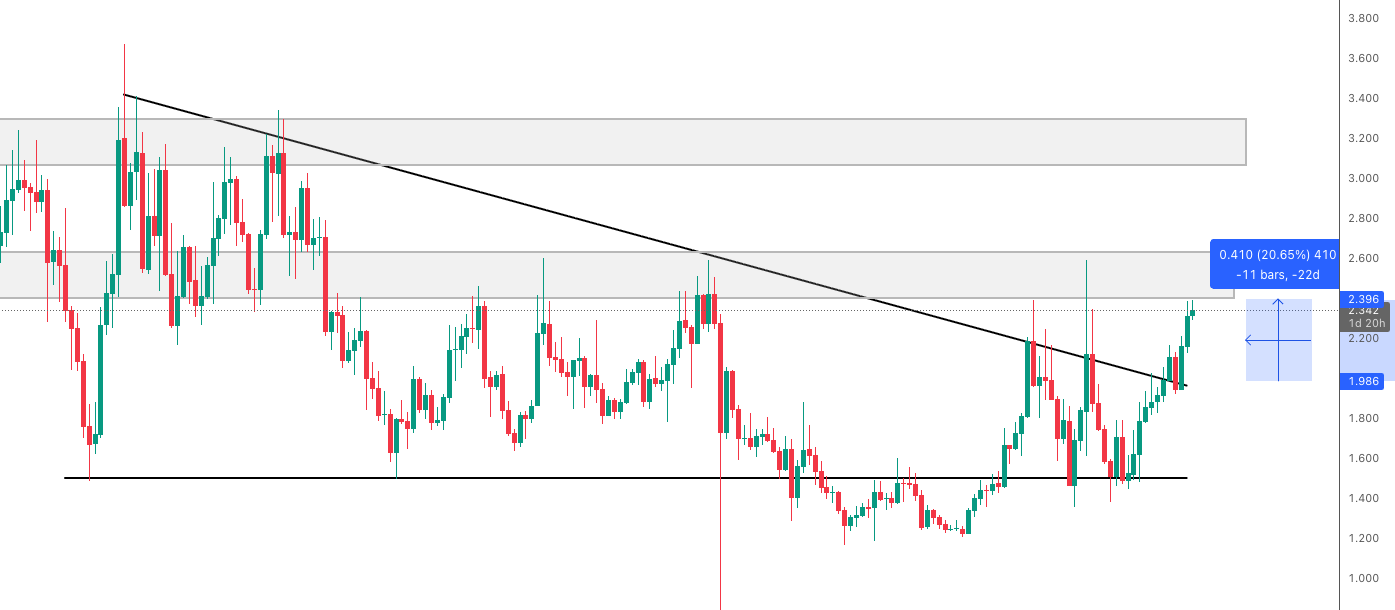
Last week, UpTrade Alpha flagged LayerZero at $1.99, it's already at $2.38. LayerZero is the messaging layer that connects blockchains together, moving ~80% of all USD value transferred between networks, with a single token, $ZRO, capturing every fee across the entire ecosystem. Yesterday $47.5M has been quietly accumulated across 9 wallets at an average entry of $1.94, representing 2.6% of circulating supply. When asked who was behind it, the ZRO CEO said they have absolutely no idea. With Cathie Wood on the advisory board, LayerZero launching their L1 later this year, and 100% of Stargate revenue about to flow directly to token holders. The market is still pricing the old version. The institutions are already inside the new one. Read the full research piece at UpTrade Alpha
Uptrade Lists Canton Network $CC
Uptrade is pleased to announce the extremely popular listing of Canton Network ($CC).
Canton Network is a privacy enabled blockchain purpose built for institutional finance and regulated markets. It allows major financial institutions like Goldman Sachs to transact on a shared infrastructure while maintaining full data privacy and compliance, participants only see what they're authorised to see. What makes it particularly interesting is that privacy is selective, transactions can still be audited by regulators where required, so institutions don't have to choose between confidentiality and compliance.
From Fear to $74k — What Drove the Move
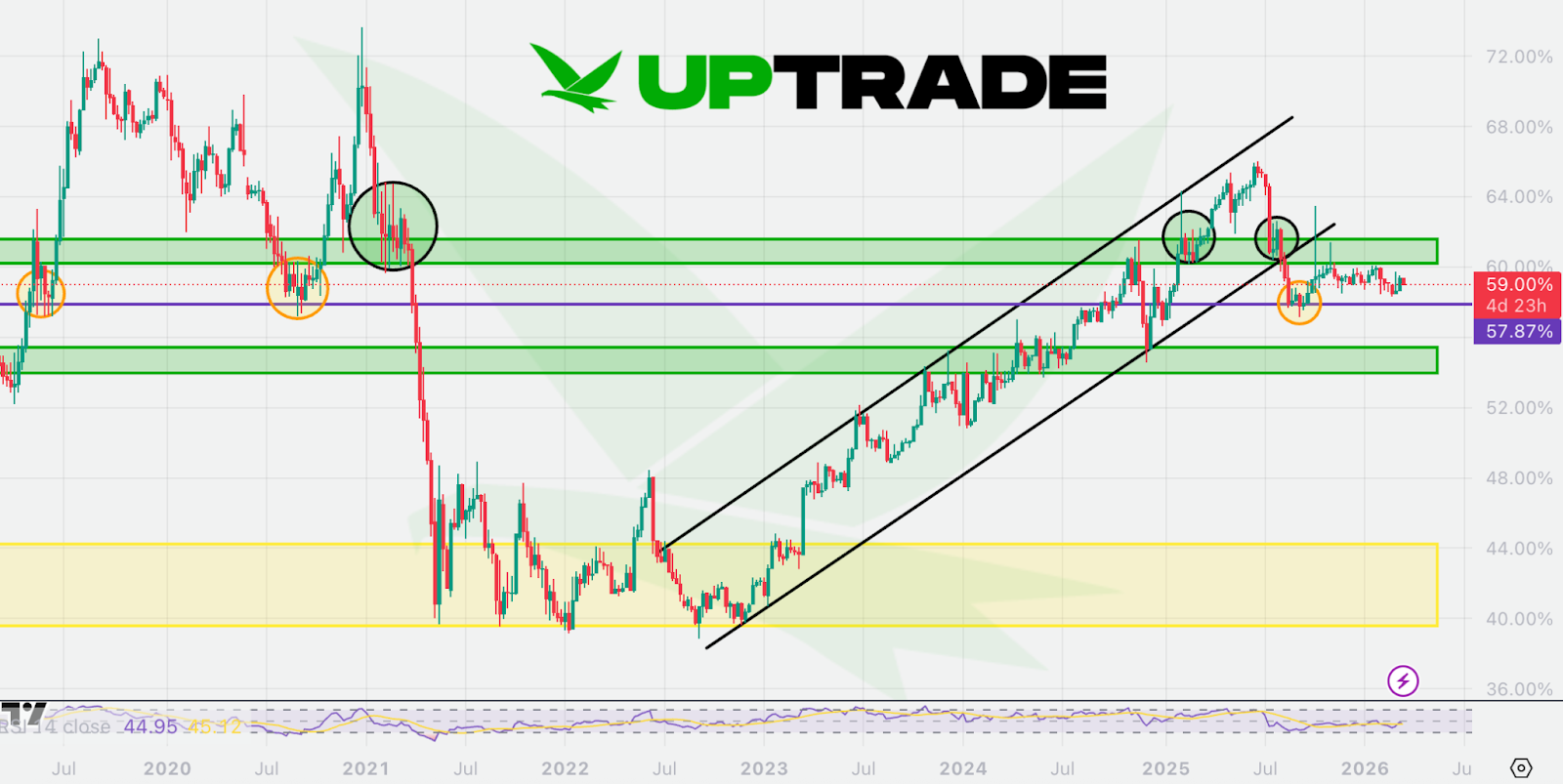
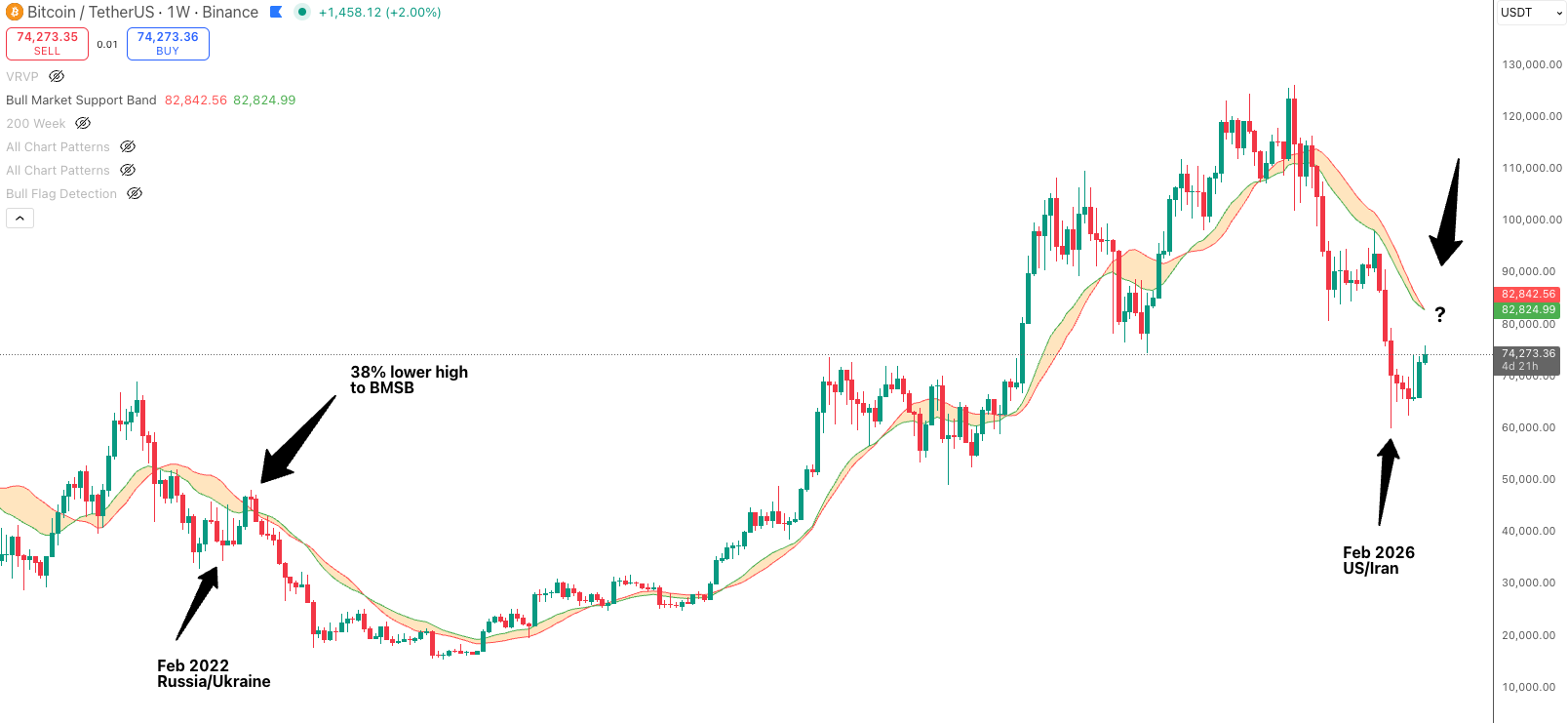
Crypto is surging. Bitcoin has posted eight consecutive green days, breaking above $74k with genuine momentum behind it. At the beginning of March, with Bitcoin in the low $60Ks and the market deep in fear, we flagged the possibility of an end of February into March relief rally with a target range between $75k and the Bull Market Support Band in the low $80Ks. The reasoning was rooted in historical precedent, the current US-Iran conflict drew striking similarities to the 2022 Russia/Ukraine invasion, where Bitcoin sold off hard on invasion day before staging a significant relief rally. We saw the same setup forming, compounded by deeply negative funding rates creating the conditions for a short squeeze that would force sidelined capital to chase. That's precisely what has played out. We remain cautiously optimistic in the short term, but the medium-term view hasn't changed. The BMSB in the low $80Ks is the key level to watch, if the playbook continues to rhyme, that's where this rally faces its most significant test.
FOMC — Tomorrow's Meeting and What It Means for Crypto
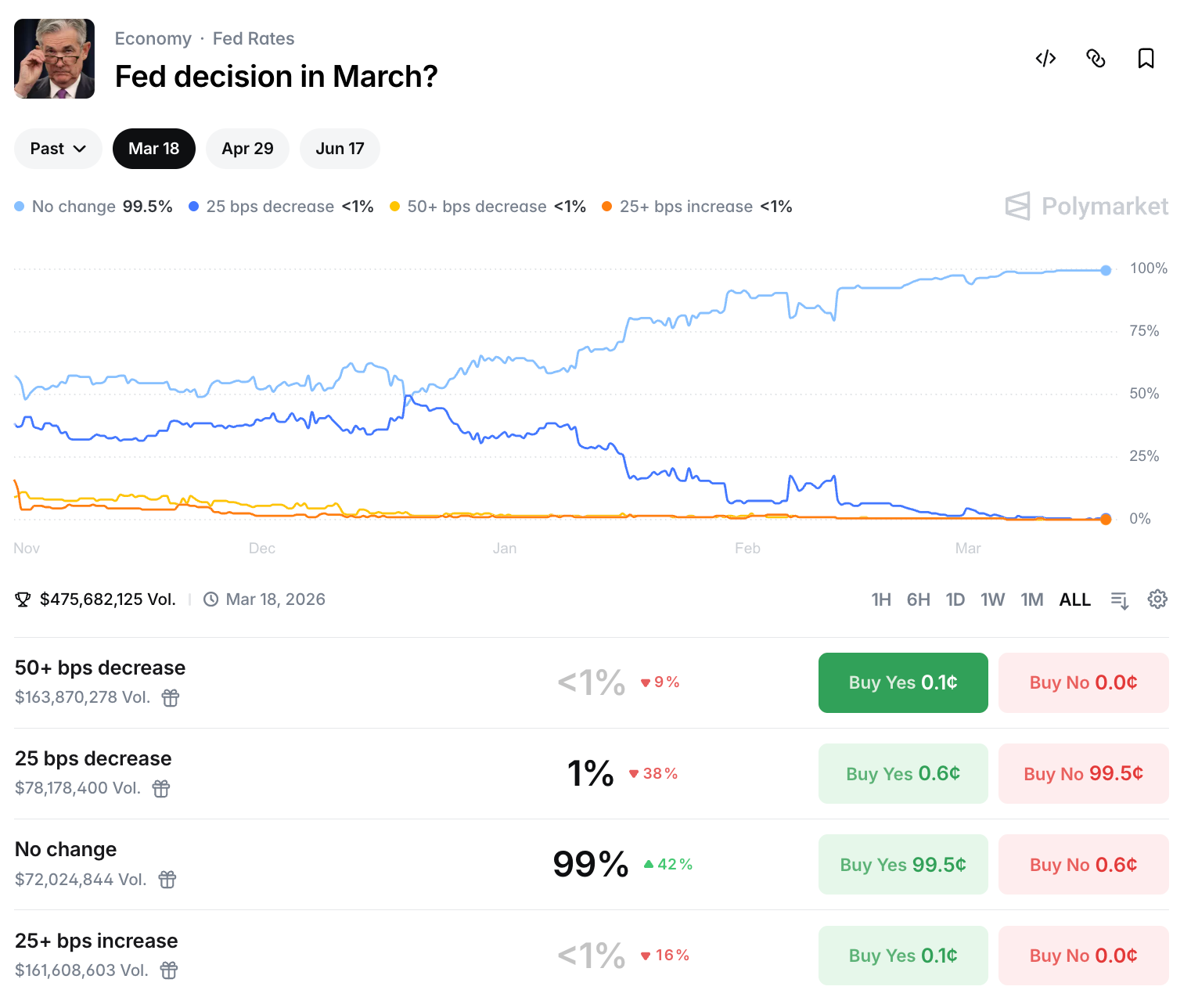
No rate cut is expected at tomorrow's FOMC meeting, but Powell's press conference will matter far more than the decision itself. With oil surging on Middle East tensions and inflation expectations rising, the Fed is navigating a genuinely difficult backdrop. Markets have already adjusted, pricing in just one small rate cut by the end of 2026, down from two a month ago. The Fed is staying higher for longer, and the market knows it. For crypto, the question is simple, does Powell strike a hawkish, or does he leave enough ambiguity to keep risk appetite alive?
Institutional ETH Accumulation Is Accelerating
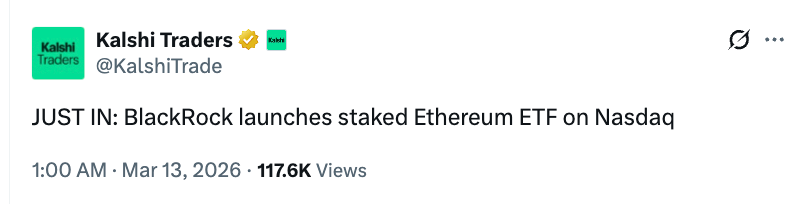
While markets have been focused on the war and Bitcoin's rally, one of the most structurally significant developments in crypto quietly went live last week. BlackRock, the world's largest asset manager launched its first crypto ETF with integrated staking rewards, staking 70–95% of its ETH holdings and distributing approximately 82% of those rewards monthly to investors. Unlike their prior spot products ETHA and IBIT, this is a yield-generating instrument, clients earn roughly yield while BlackRock takes a 15% clip. Both parties win. The ETF pulled in $104M in its first three days, a strong start that barely made headlines. The supply implication is significant, a material portion of BlackRock's ETH holdings moving into staking directly reduces circulating supply at a time when ETH is already showing strength.
Adding to the conviction, BitMine Immersion Technologies added approximately 61,000 ETH in the past week alone, one of their largest single-week accumulations of 2026, pushing total holdings to approximately 4.596 million ETH, representing 3.81% of the entire ETH supply with over 3 million actively staked. Two of the largest institutional players in the space are accumulating and staking aggressively.
General information only. This article is for educational purposes and does not constitute financial, investment, legal or tax advice, nor a recommendation to buy, sell or hold any asset. Cryptocurrency is a high-risk asset and you should consider your own circumstances and seek independent advice before making any decision. Uptrade does not make price predictions.
Kane leads our international research division, delivering clear, actionable insights into crypto markets and emerging investment opportunities. A true “crypto native,” he has over seven years of hands-on experience, formal qualifications in finance and economics, and has worked across Web3 hedge funds, venture capital, and leading incubators.
View all articles by Kane