
Weekly Market Update: 10 June 2026
There was continued weakness in the crypto market this week with Bitcoin making a new cycle low, breaking through the February floor...


Market On Edge for Sub $60k
There was continued weakness in the crypto market this week with Bitcoin making a new cycle low, breaking through the February floor and hitting $59,000 before bouncing and spending most of the week grinding between $61,000 and $62,000. Select tokens showed strength but the majority of moves remain capped by the overarching weakness and the very real threat of another liquidation cascade if Bitcoin loses $60,000.
Strategy resumed buying Bitcoin this week after last week's sell, but the more interesting story is what is happening in broader markets. SpaceX launches this week, the largest IPO in history at a $1.75 trillion valuation, with Anthropic and OpenAI both filing simultaneously at combined valuations approaching $2 trillion. Three landmark listings. All competing for the same pool of institutional capital at the same time. When $400 billion in new equity hits the market the money to buy it has to come from somewhere, and that concentration of liquidity demand is a meaningful headwind for risk assets in the short term.
.png)
Morpho Raise $175m
Morpho Association raised $175 million in one of the largest funding rounds in DeFi history, structured as a direct token purchase of MORPHO (not equity in any parent company or lab). The round, announced June 9, 2026 and co-led by Paradigm, a16z crypto, and Ribbit Capital, saw investors buy MORPHO tokens at the token’s average monthly market price, implying a valuation of up to $2 billion FDV. Strategic participants included Apollo Funds, Circle Ventures, VanEck, and others. This token-based raise stands out for its size and reflects deep institutional conviction in Morpho’s vision to build the open credit network, powering customisable lending markets and bridging traditional finance with on-chain credit at scale.
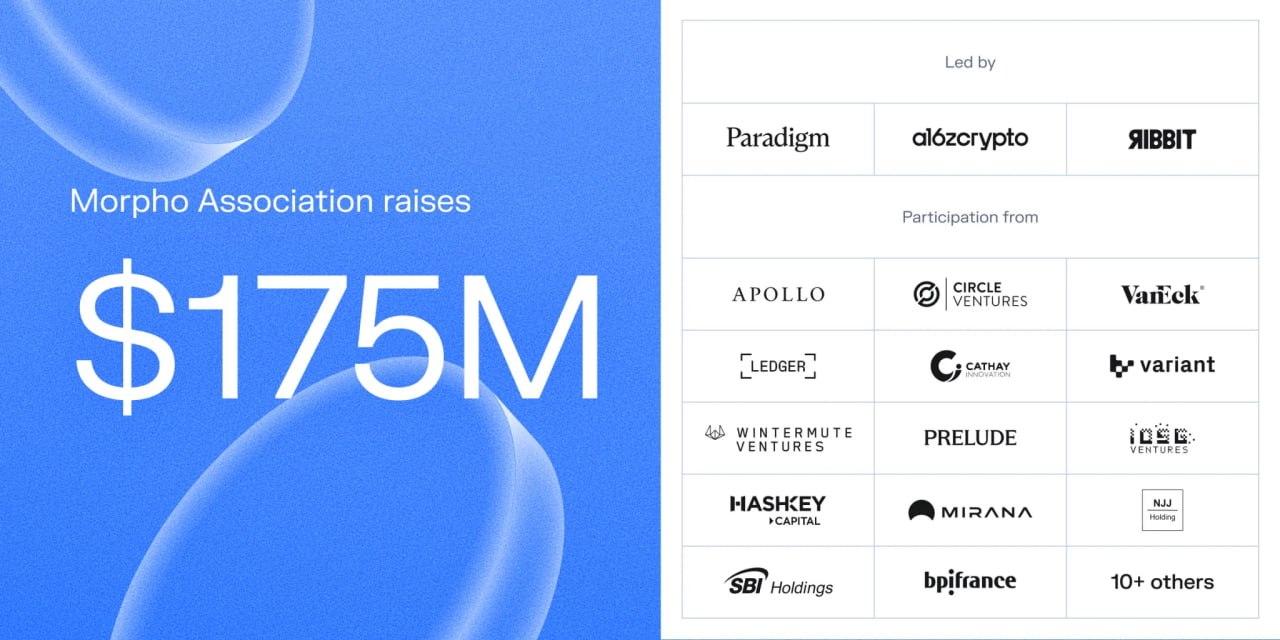
Morpho has been one of the highest-conviction tokens on our list and we’ve covered it thoroughly with the token being up 76% YTD. We also interviewed one of Morpho’s growth leads, which you can check out at uptradealpha.com if you’re interested in a deeper dive.
NEAR x Hyperliquid Partnership
Today NEAR Protocol announced a major integration of Hyperliquid perpetual futures directly into its near.com platform. Users can now deposit assets from over 35 chains, with automatic swapping to USDC, and immediately access 50+ Hyperliquid perp markets with up to 40x leverage, all without leaving the NEAR ecosystem. Powered by NEAR Intents for seamless chain abstraction, the move delivers centralised exchange-like speed and liquidity across 120+ assets and 40 chains. Private perps are planned next, further enhancing trader privacy. NEAR co-founder Illia Polosukhin framed it as progress toward “one account for everything in DeFi.”

This partnership is highly meaningful for both sides. Hyperliquid, already the dominant on-chain perp DEX with billions in daily volume, gains frictionless onboarding and distribution through NEAR's user base and intents infrastructure, expanding its reach into multi-chain DeFi. For NEAR, it adds powerful trading tools natively, boosting utility and retention. Hyperliquid remains the standout performer of 2026, delivering year-to-date gains of +125%, while NEAR is also up +43%, despite most of the market and digital assets being down significantly over the same period.
How Strategy Added 1,550 BTC After Selling 32
Michael Saylor and Strategy once again demonstrated their influence on Bitcoin markets. After selling just 32 BTC in late May 2026 to fund distributions on its STRC preferred stock, a move clearly outlined in the vehicle's documentation, the market reacted with fear, uncertainty, and speculation. Despite representing a tiny fraction of Strategy's ~843,000 BTC holdings, the sale became a major talking point and contributed to a period of weakness in Bitcoin.
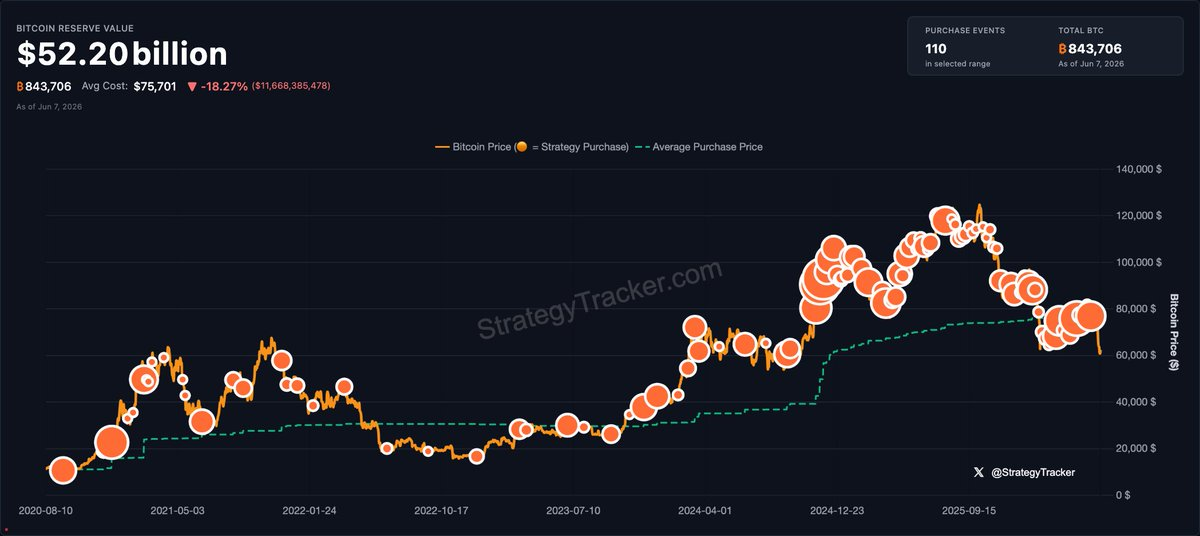
While the market was busy debating the significance of 32 BTC, Strategy was doing what it has always done. Between June 1 and June 7, the company acquired 1,550 BTC for approximately $101 million at an average price of ~$65,300, around 12% lower than the levels where the 32 BTC were sold.

Then came Saylor's now-famous tweet: "32?", poking fun at the market as Strategy bought back nearly 50x that amount at a significantly lower cost basis.This wasn't a shift in conviction or a change in strategy. It was the exact playbook outlined for managing dividend obligations while continuing to maximise Bitcoin per share. They were never going to remain net sellers, the market simply handed them an opportunity to accumulate more.
RevFi - Revenue Finance Update
The RevFi thesis continues to play out. As crypto matures, capital is increasingly concentrating in protocols that generate real, auditable cash flow rather than relying purely on narrative-driven demand. Institutional capital needs valuation frameworks it can underwrite, and revenue provides exactly that. Protocols with sustainable earnings, buybacks, fee distributions, or other value-accrual mechanisms are beginning to be valued more like businesses and less like speculative assets. The result is a growing divergence between revenue-generating protocols and the broader DeFi market, particularly during periods of uncertainty and volatility.
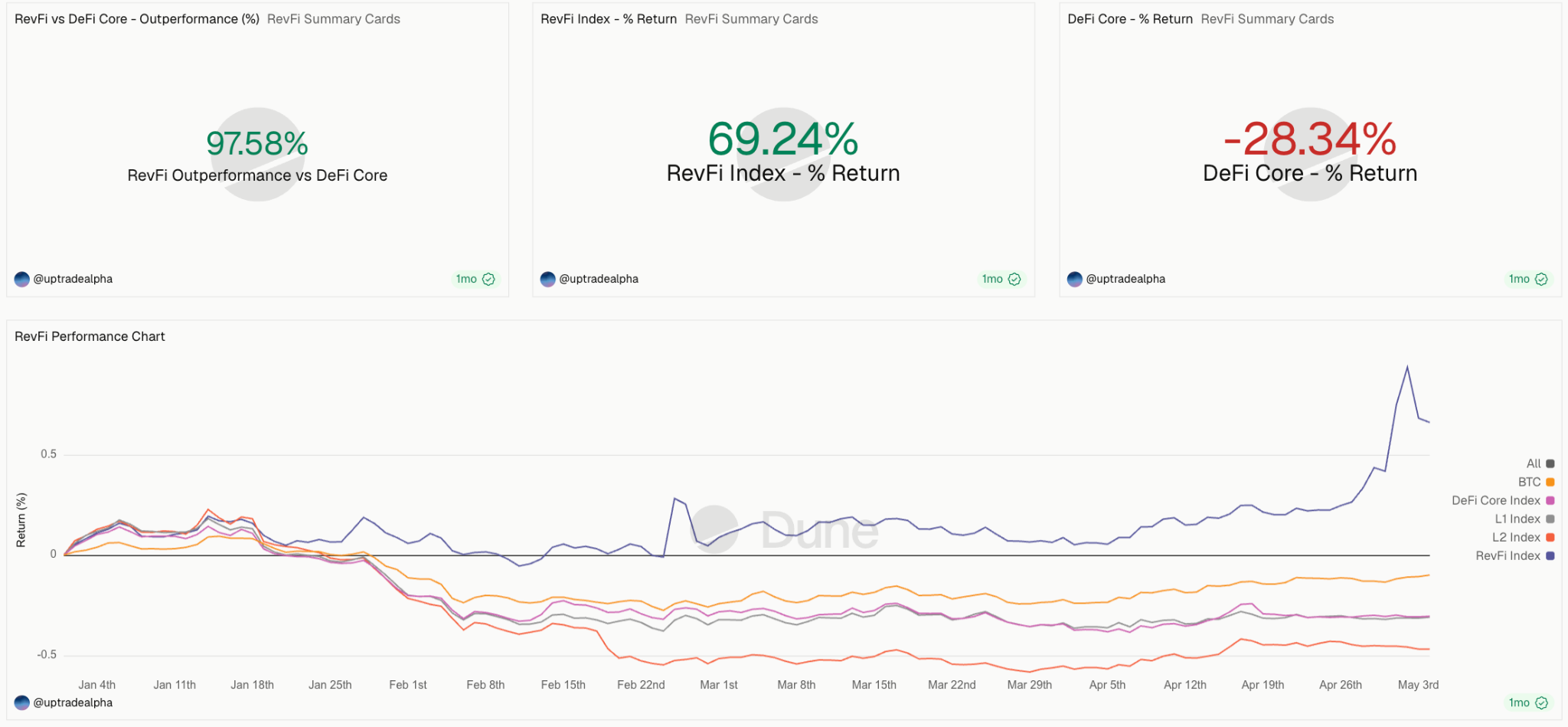
Year-to-date, the RevFi Index is up 69.24%, outperforming the broader DeFi Core Index by 97.58 percentage points, while DeFi Core remains down 28.34%. Through a different lens, The gap highlights one of the clearest trends of this cycle: protocols generating and returning value to token holders continue attracting capital even as much of the market struggles. Hyperliquid remains the standout example, with its revenue-funded buyback model creating persistent demand backed by real economic activity rather than speculation alone. As more investors begin evaluating tokens through the lens of cash flows and value accrual, the distinction between revenue-generating protocols and the rest of the market continues to widen.
Zcash - The Bug That Could Have Broken Everything
Zcash has been one of the standout performers of the cycle for good reason. It is a privacy-focused cryptocurrency with Bitcoin-like tokenomics, the same 21 million maximum supply, the same halving schedule, but with one critical difference. Zcash gives users the ability to send completely private transactions where the sender, receiver, and amount are all hidden from public view. In a world where regulators are scrutinising on-chain activity and institutions need transaction privacy to operate at scale, that feature set has made Zcash one of the most relevant assets in the market. Add in its quantum resistant cryptography and you have a token sitting at the intersection of the two most compelling narratives in crypto right now, privacy and quantum security. It had nearly reached its all time highs on the back of exactly that momentum.
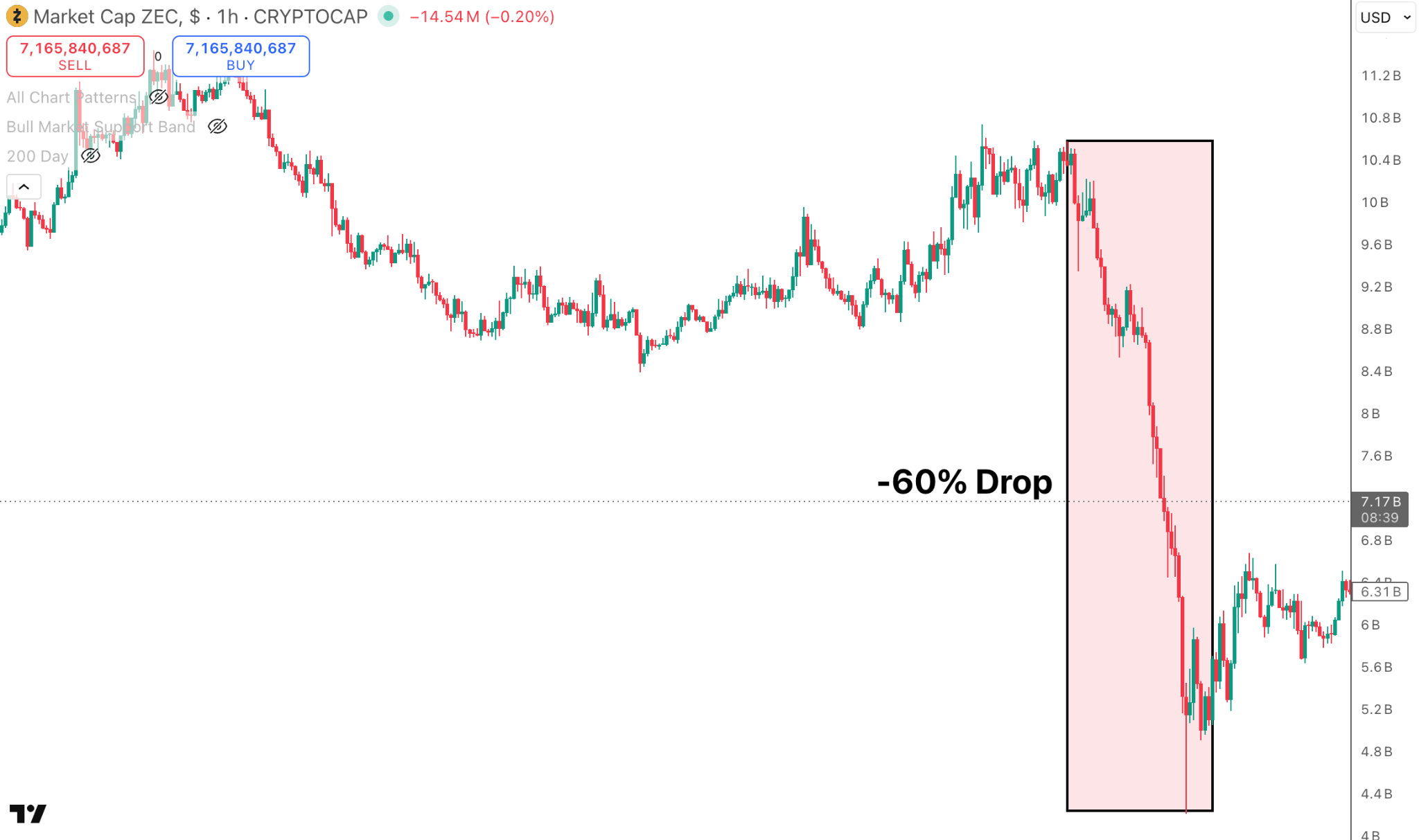
Then came the disclosure that stopped the market in its tracks. An AI model that anyone can use, developed by Anthropip, the team behind Claude, identified a critical vulnerability in Zcash's codebase that could have allowed an attacker to mint an unlimited number of ZEC tokens. Infinite supply on a fixed supply asset is as serious as a vulnerability gets. The Zcash team disclosed the bug, stated it had been patched, and confirmed that no tokens were ever minted exploiting the flaw. The market cap collapsed from approximately $11.4 billion to $4 billion almost immediately. Here is the uncomfortable reality that the team cannot escape. Zcash's core value proposition is that its privacy layer is mathematically verifiable, you can cryptographically prove transactions are valid without revealing their details. But you cannot apply that same cryptographic certainty to the question of whether someone exploited this vulnerability before it was patched. The privacy that makes Zcash powerful is precisely the feature that makes it impossible to rule out that unlimited tokens were quietly minted and are now sitting in shielded wallets, invisible to everyone including the Zcash team. The market is pricing that uncertainty in.
Anthropic Just Released Its Most Dangerous Model
Crypto has a security crisis and the numbers make it impossible to ignore. $3.4 billion was stolen from crypto platforms in 2025, the worst year on record, with the average loss per incident up 66.6% year over year and recovery rates collapsing to just 0.4% of stolen funds. The attacks are getting larger, more sophisticated, and increasingly hard to detect, and the most recent examples are alarming. On April 1, 2026, North Korean hackers drained $285 million from Drift Protocol, the largest DeFi hack of 2026 through a months-long operation combining social engineering, oracle manipulation, and a governance exploit that executed in just 12 minutes. The Zcash vulnerability found by a Claude AI model that could have allowed unlimited token minting on a fixed supply asset sent the market cap from $11.4 billion to $4 billion on disclosure alone. The question the industry is starting to ask is whether the acceleration in exploit sophistication runs parallel to the rapid development of AI models purpose built to find exactly these kinds of vulnerabilities at speeds no human auditor can match.
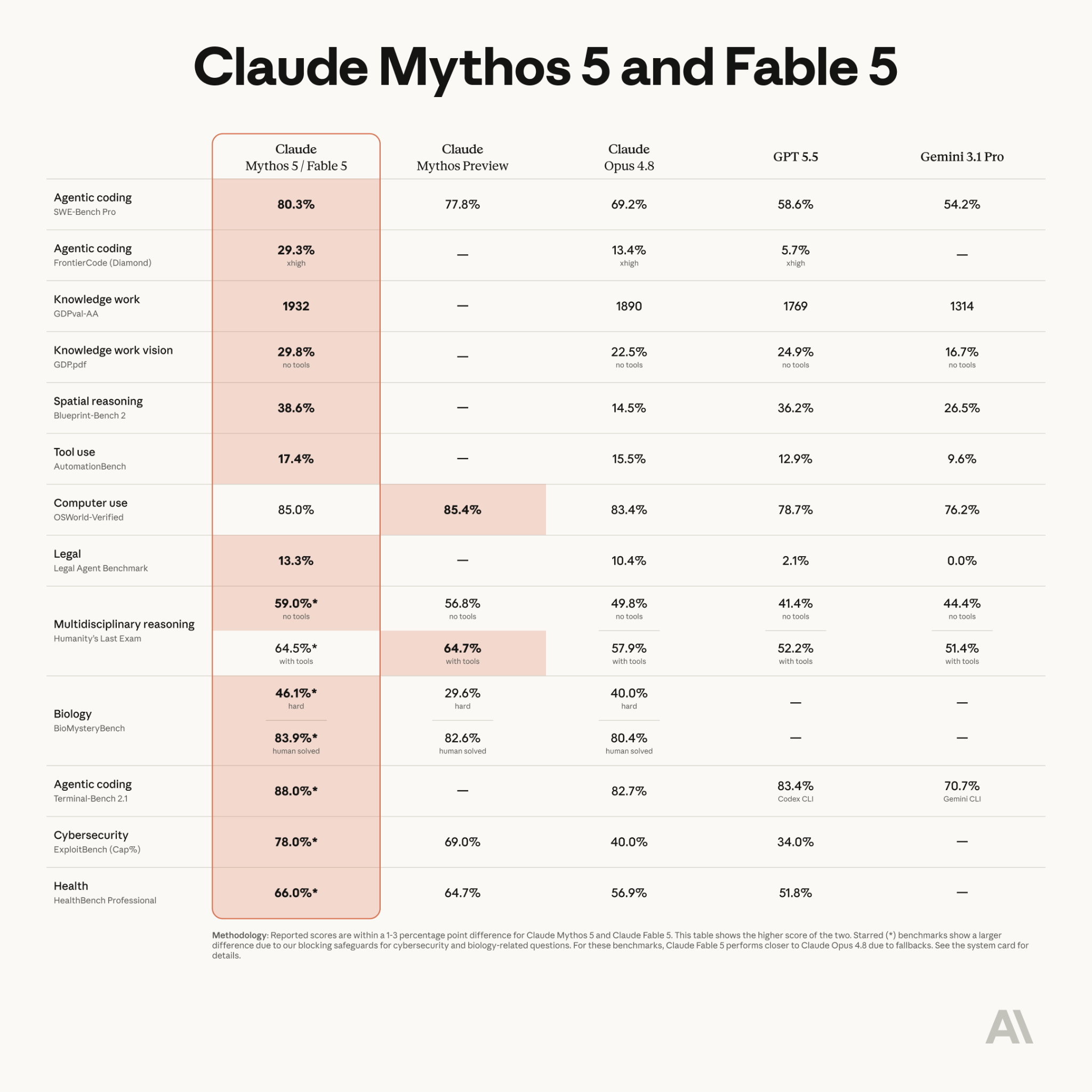
Anthropic's Mythos model is the most powerful example of this technology, and a version of it is now being released publicly. Claude Fable 5 is built on the same underlying model as Mythos, the one Anthropic spent months saying was too dangerous to release, with guardrails blocking the most dangerous use cases including cybersecurity exploits. Coinbase has already confirmed access to the Mythos preview, stating they will use it to harden the security of their systems and the open source software they rely on. The Zcash case is the clearest documented example, a Claude model identified a critical smart contract vulnerability that had gone undetected by human auditors. The uncomfortable reality is that the same capability allowing Coinbase to harden its systems could, in the wrong hands, identify vulnerabilities faster than any security team can patch them. AI is not inherently on the side of the defender or the attacker. It is a tool, and right now both sides of this arms race have access to increasingly powerful versions of it. The protocols that survive the next phase of this industry will be the ones that treat security as a first principle rather than an afterthought.
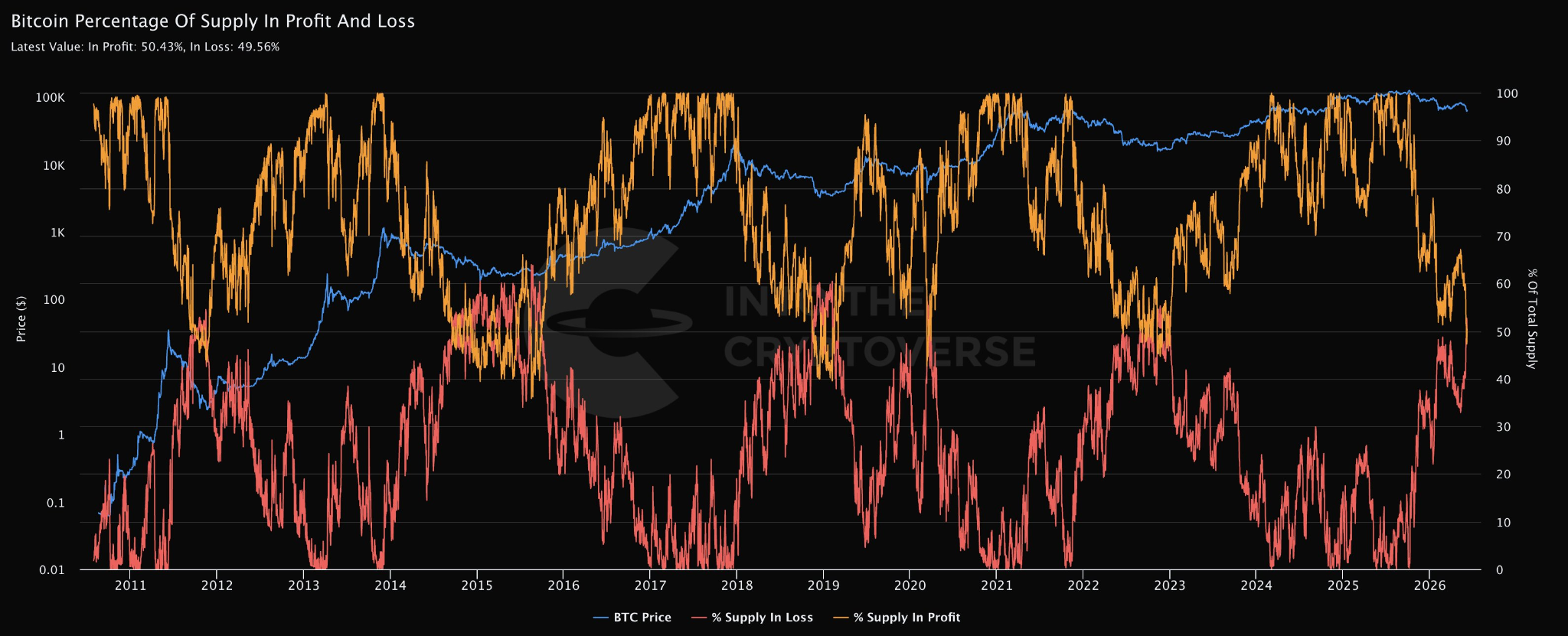
Bitcoin Supply in Profit and Loss — A Signal Worth Paying Attention To
This metric tells us something simple but powerful. Right now exactly half of all Bitcoin in existence is held by people who are underwater on their investment — 50.43% of supply is in profit and 49.56% is in loss. When these two lines converge it means the market is evenly split between winners and losers, a level of widespread pain that has historically coincided with major cycle lows.
We first flagged this chart back in January when the lines were approaching each other, only to pull away without crossing. They have now crossed. Looking back at every major Bitcoin cycle, this crossover has occurred near the lows each time, 2015, 2018, 2022 and in each case the years that followed produced significant recoveries. No metric is perfect and past performance does not guarantee future results, but across multiple cycles this signal has been one of the more reliable data points for identifying when the majority of the selling pressure has already been absorbed.
General information only. This article is for educational purposes and does not constitute financial, investment, legal or tax advice, nor a recommendation to buy, sell or hold any asset. Cryptocurrency is a high-risk asset and you should consider your own circumstances and seek independent advice before making any decision. Uptrade does not make price predictions.
Kane leads our international research division, delivering clear, actionable insights into crypto markets and emerging investment opportunities. A true “crypto native,” he has over seven years of hands-on experience, formal qualifications in finance and economics, and has worked across Web3 hedge funds, venture capital, and leading incubators.
View all articles by Kane