
Weekly Market Update: 03 June 2026
What a week it has been. Bitcoin dropped 12.2%, plummeting below $70,000, the kind of move that would typically drag the entire altcoin market...


A Diverging Market — Bitcoin Bleeds While Select Alts Break Out
What a week it has been. Bitcoin dropped 12.2%, plummeting below $70,000, the kind of move that would typically drag the entire altcoin market down with it. This time it did not. Instead we are seeing a clear divergence, with a select group of strong tokens breaking higher while Bitcoin struggles. XLM up 49%, LIT up 32%, and HYPE hitting a new all time high above $75, up 20% on the week.
What drove Bitcoin lower was a combination of factors converging simultaneously. Saylor's Strategy confirming they sold Bitcoin created a narrative overhang the market is still digesting. Quantum computing headlines continue to add uncertainty around long term security assumptions. Seasonal patterns have historically shown weakness in this window. And all of it combined to trigger significant institutional outflows that compounded the move lower. More than $2.41 billion in crypto positions were liquidated in just 48 hours, the kind of forced selling that accelerates moves in both directions and clears out overleveraged positions quickly. The weakness spread across the majors, ETH down 10%, putting Tom Lee and Bitmine at an estimated $8.7 billion in unrealised losses, XRP down 8%, and SOL down 12%. A difficult week for anyone holding the majors. A completely different story for those positioned in the trending narratives.
.png)
Michael Saylor Sells Bitcoin — What It Actually Means
Michael Saylor's Strategy announced they sold 32 BTC for over $2.5 million, 0.004% of their total stack. Since then Bitcoin has dropped 10%, though it is not the selling pressure itself causing this. When someone has built an entire identity around "never sell your Bitcoin, sell a kidney first" and then sells Bitcoin, the credibility of the absolute conviction narrative takes a hit. Worth noting this is not the first time, Strategy sold 704 BTC in December 2022 near the cycle low for tax-loss harvesting before repurchasing 810 BTC two days later.
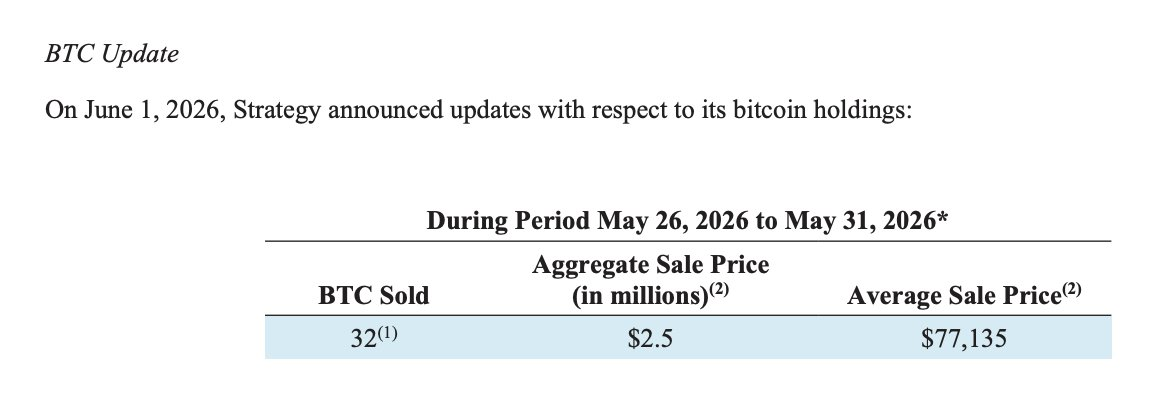
Strategy holds 818,000 Bitcoin and remains the largest corporate holder in the world by a significant margin. The accumulation thesis is intact and the selling is mathematically irrelevant to their overall position. What does change is the "never sell" narrative is officially retired. The Saylor narrative is clearly acting as a heavy overhead right now, the market is grappling with the centralised concentration of supply, the mechanics of their accumulation strategy, and now the reality that selling is on the table. None of these are new risks but the market is repricing them simultaneously.
Perp DEX Wars: Is A Rotation Already Underway?
Last week Hyperliquid went on a parabolic run past its all time highs, straight into full price discovery, and if you've been in crypto long enough, you know what happens next. Capital doesn't usually like to sit still. It looks for the next asymmetric bet in the same sector, earlier in the curve.
That's where Lighter comes in. A token we flagged early on at $1.00 now up 65% whilst the broader market continues to bleed.
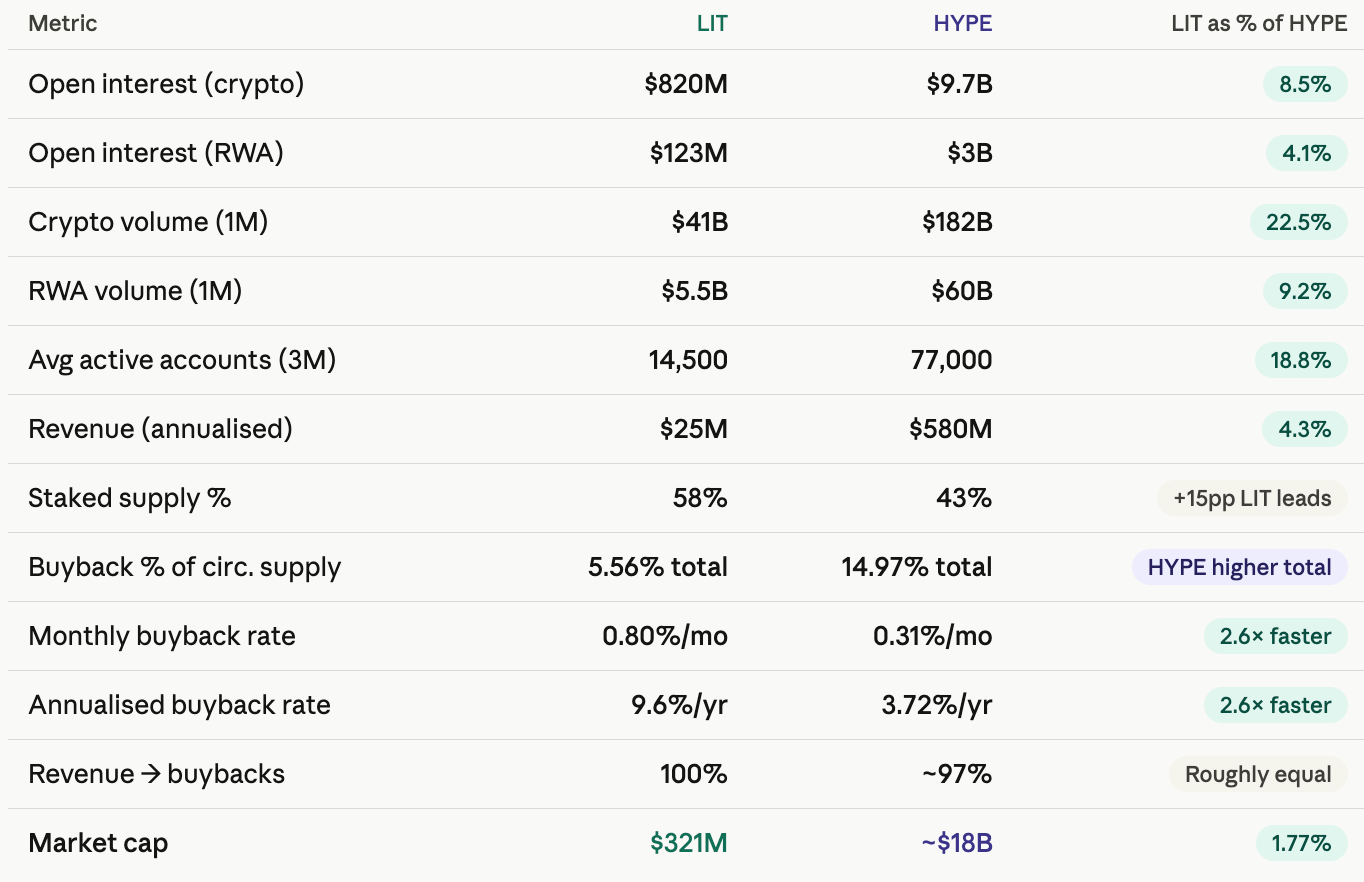
Our Core Thesis: LIT generates 4–22% of HYPE's output metrics but trades at 1.77% of its market cap. The gap is not irrational, HYPE deserves premiums for brand, duration, and institutional access. But the discount on LIT appears steep for a protocol with this calibre of team, this rate of buybacks, and this degree of regulatory readiness.
While HYPE was making headlines, Lighter has quietly been doing 22% of its crypto volume and running a buyback rate 2.6x faster, all while trading at just 1.77% of HYPE's market cap. The gap between what the metrics say and what the market is pricing is what we highlighted to our members. Add in a US C-Corp structure, a CFTC licence pursuit at a time when US on-chain derivatives regulation is front of mind, and a team backed by Founders Fund and Robinhood, and the setup starts to look less like speculation and more like a rotation trade with real fundamental backing.
We put together a full side-by-side breakdown — team, on-chain metrics, tokenomics, risks, and the valuation gap theory. It's live in UpTrade Alpha now
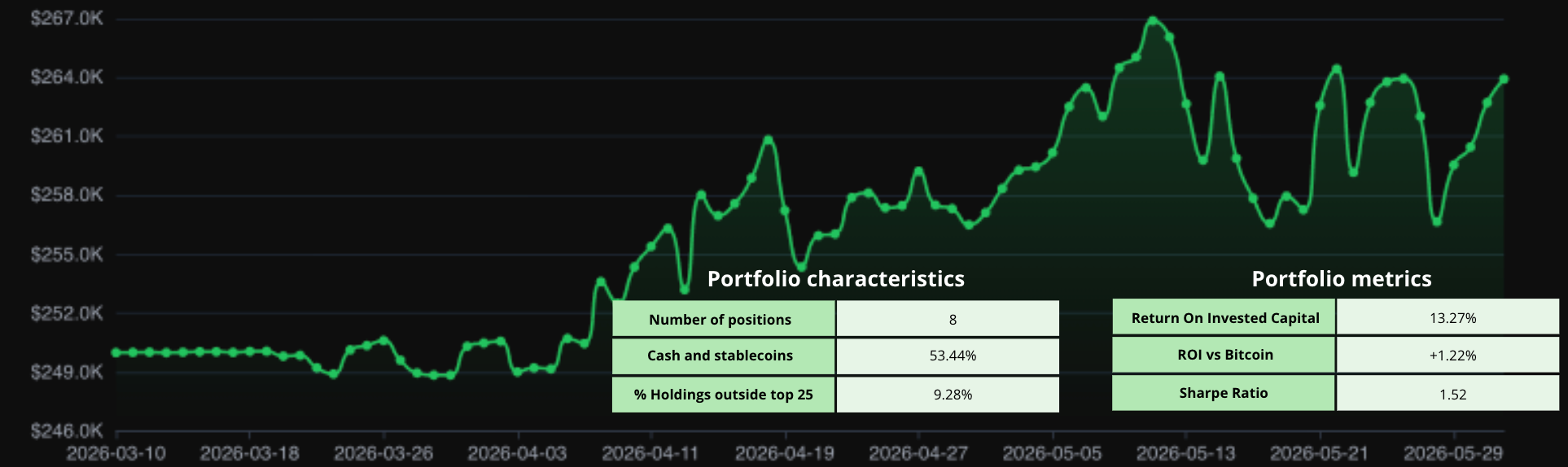
UpTrade Alpha Portfolio — May 2026 Recap - Stats as of June 1
May was a month that rewarded selectivity. The broader crypto market delivered a mixed picture, Bitcoin ranged between $73k–$82k, while ETH, XRP, and SOL all closed the month in the red. For those positioned in high-conviction, revenue-generating protocols, however, there were real opportunities to be found.
The Alpha Portfolio closed May up +2.84% for the month, bringing the inception-to-date return to +5.76% since launching in March 2026. On invested capital, the portfolio has returned 13.27%, outperforming Bitcoin by +1.22%, with a Sharpe Ratio of 1.52.
On the macro side, the S&P 500 hit record highs at 7,563, the Fed held rates at 3.50–3.75%, and the Digital Asset Market CLARITY Act cleared the Senate Banking Committee — the most significant move toward a federal crypto regulatory framework in US history.
The standout of the month was Hyperliquid, surging to a new all-time high and delivering over 200% year-to-date.
Full portfolio holdings, positioning, and trade rationale are available exclusively to Alpha Pro members. 👉 [Link to membership]
Altcoin Thesis Playing Out
For the past two years we've been saying the same thing… the era of a rising tide lifting all boats in crypto is over. The altcoin market is maturing, and May was another month that reinforced exactly that. Total 3 market cap, the broadest measure of altcoin health excluding BTC and ETH, remains suppressed, and the governance tokens and pure speculation plays from previous cycles continue their slow, quiet decline. This isn't a temporary rotation, it's a structural shift we have been noticing for quite some time.
Total 3 Market cap
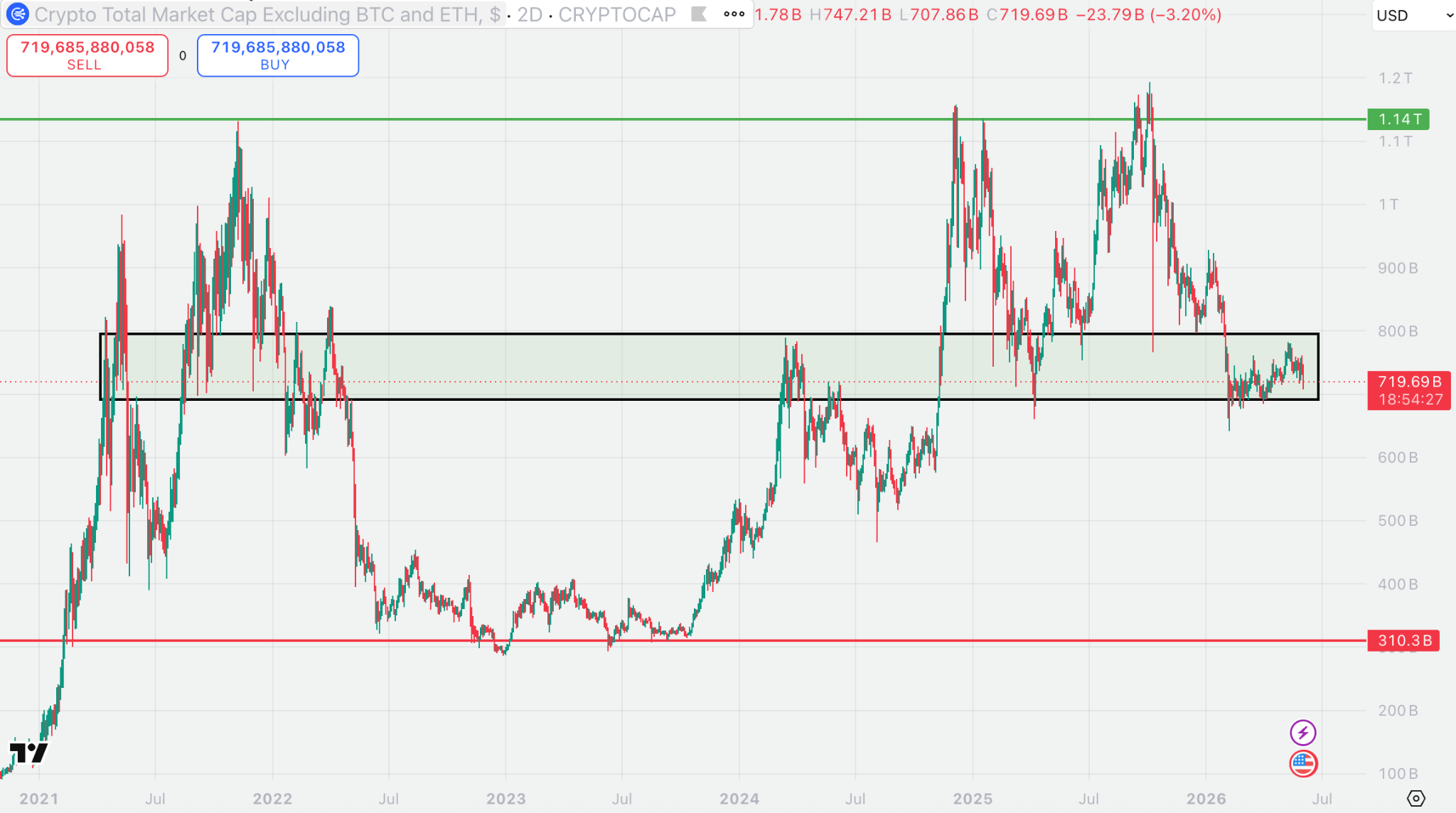
- Altcoin suppression remains evident. Despite millions of new tokens entering the market since the last cycle and significantly more capital flowing through ETF products, the impact on Total3 has been limited. The market remains below levels seen in previous cycles, with only a small number of outlier outperformers driving the majority of gains.
What is winning? Real revenue, real users, and real utility. The protocols that generate actual cashflow and return value to holders are separating themselves from the noise, and that gap is only widening. Hyperliquid is the clearest example, surging to all-time highs with annualised holder revenue approaching $607M, it's not just a narrative trade, it's a business that can be underwritten. Morpho is another, a lending protocol that has quietly built one of the most capital-efficient models in DeFi, with fees that reflect genuine product-market fit. We've also been taking a stronger interest in NEAR lately, particularly given its positioning at the intersection of AI, privacy and blockchain infrastructure. Privacy chains are also worth watching closely. As regulatory frameworks like the CLARITY Act begin to take shape in the US, privacy-preserving infrastructure becomes a more interesting and arguably more necessary part of the stack.
RevFi Stats
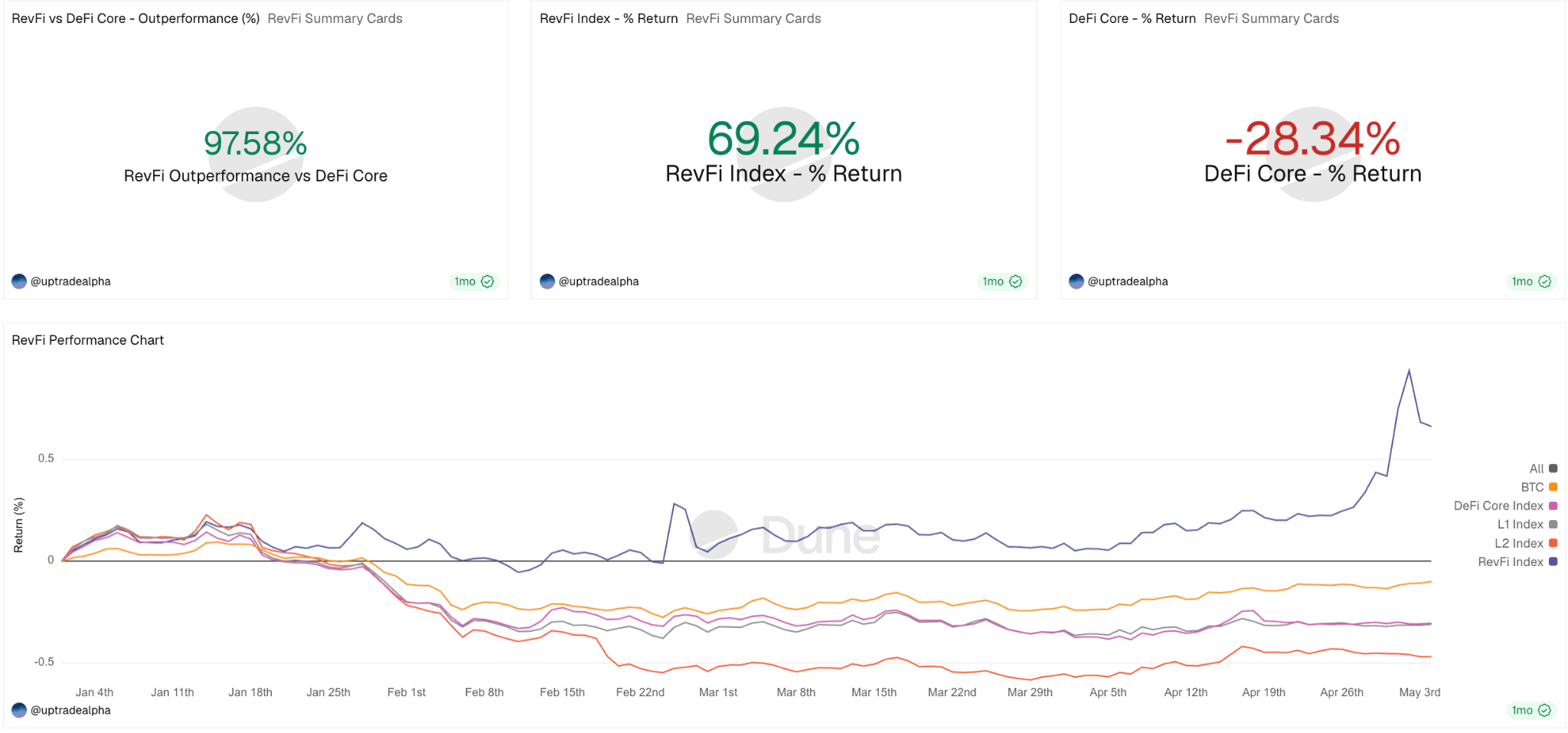
- UpTrade Alpha RevFi dashboard monitoring the most revenue-efficient and cash-generating companies across crypto against broader DeFi, L1 sectors and BTC. Outperformance of 97.5%+ versus core DeFi exposures.
The playbook hasn't changed, ignore the noise, focus on protocols that earn, and let the rest of the market work out which tokens were always going to zero.
Stellar Partners with DTCC
DTCC, the company that settles the majority of US financial transactions and custodies over $100 trillion in stocks, ETFs, Treasuries, and bonds, has announced plans to tokenise assets on the Stellar network. XLM jumped 15% on the news and rallied 100% from the local bottom to local top. The tokenisation is expected to go live in the first half of 2027, this brings one of the most important financial institutions in the world directly onto Stellar's blockchain as part of a broader multi-chain RWA strategy.
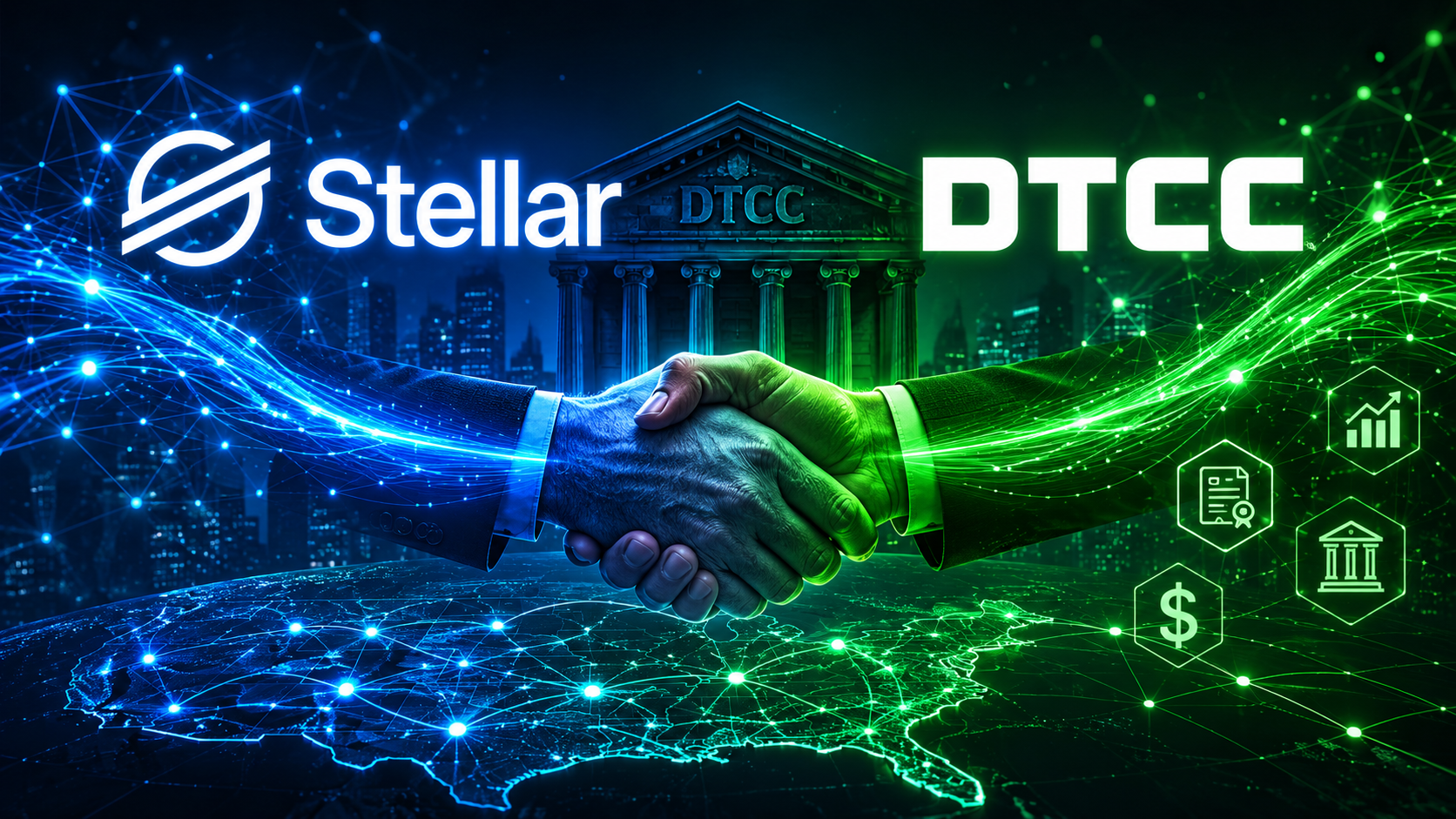
For XLM holders this is a meaningful development. The narrative around Stellar has always been its positioning for institutional payments and cross-border settlement and this announcement validates that thesis. Worth noting, despite the move, XLM is still down 65% from its 2025 high, which tells you how much ground the token has to recover. The crypto space has seen its share of high profile partnership announcements that generate price pumps but fail to translate into sustained on-chain activity and real usage. The 2027 timeline gives us plenty of runway to see whether this develops into a genuine, volume generating relationship or remains a headline that fades.
Private Plasma One Access
Plasma One does not launch publicly until next month but we have had early access for the past two months and have been testing it out. Plasma One is a crypto neobank that bridges the gap between crypto and everyday spending. Instead of selling your crypto, converting to fiat, and off-ramping into a bank account to spend it, you keep your money in USDC or USDT on-chain and spend directly from it anywhere in the world. It functions exactly like a debit card, accepted globally wherever Visa and Mastercard are supported.
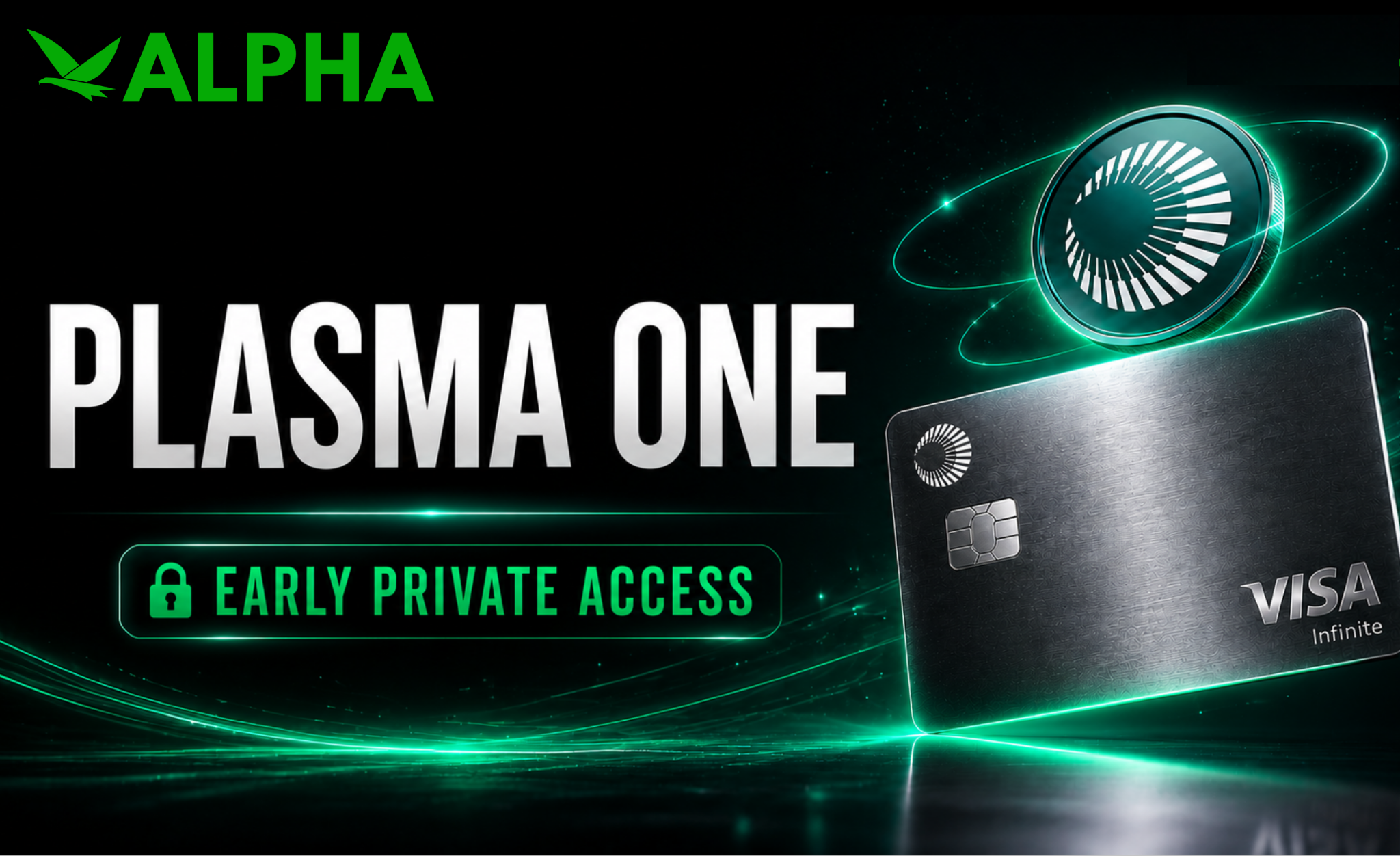
The standout features are the 3% cashback paid in XPL on every purchase, yield on your balance through DeFi integrations like Aave, and free global stablecoin transfers. For those outside the US, it’s a 1% FX fee. It is iPhone only for now and as a pre-launch product some features are still being rolled out. We have a limited number of early access spots to give before the public launch. Use code “UALPHA” after downloading the Plasma One app from the Apple Store.
General information only. This article is for educational purposes and does not constitute financial, investment, legal or tax advice, nor a recommendation to buy, sell or hold any asset. Cryptocurrency is a high-risk asset and you should consider your own circumstances and seek independent advice before making any decision. Uptrade does not make price predictions.
Kane leads our international research division, delivering clear, actionable insights into crypto markets and emerging investment opportunities. A true “crypto native,” he has over seven years of hands-on experience, formal qualifications in finance and economics, and has worked across Web3 hedge funds, venture capital, and leading incubators.
View all articles by Kane