
Weekly Market Update: 01 April 2026


A Headline Driven Week in a Fragile Market
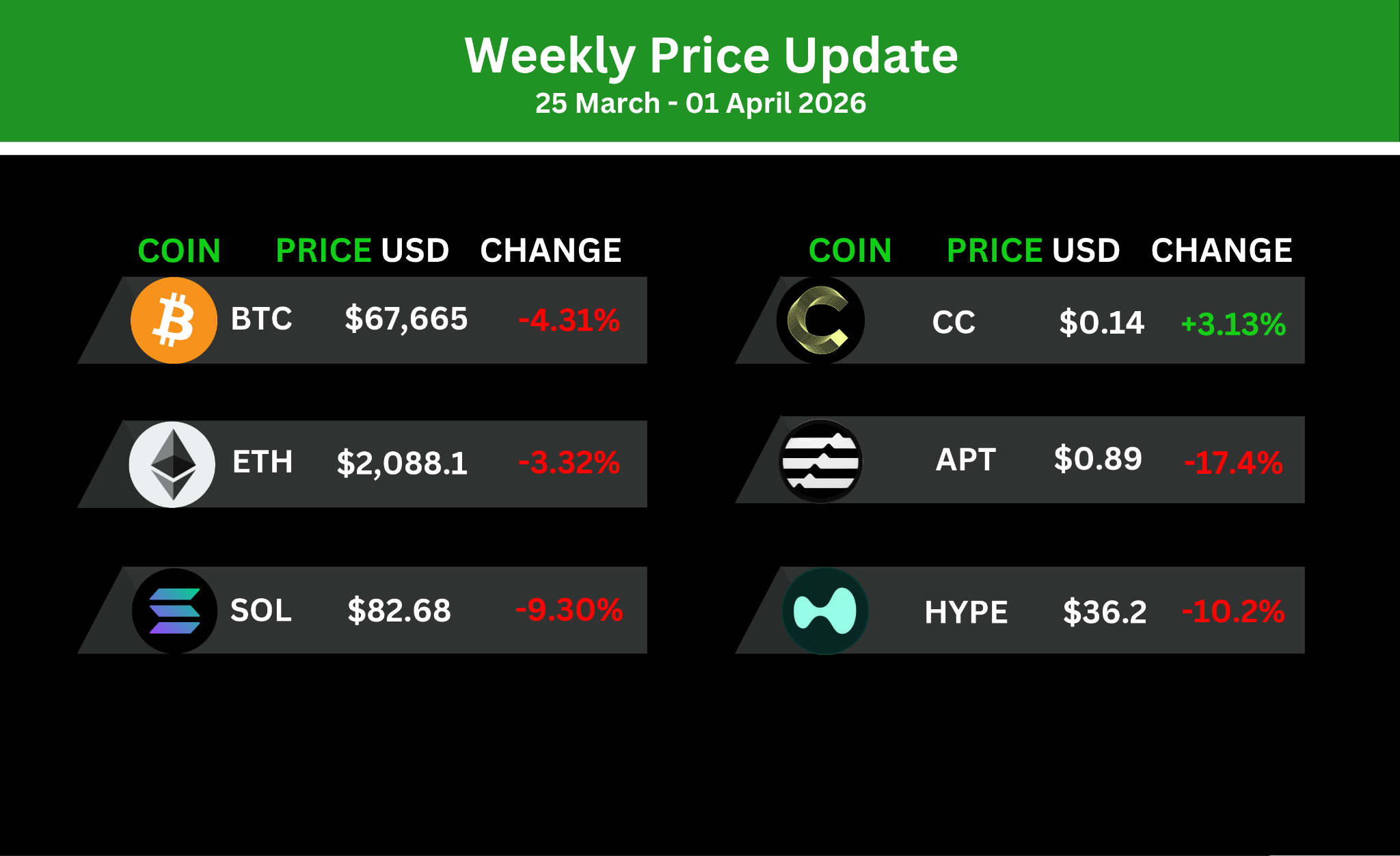
This week crypto moved entirely to the rhythm of geopolitical headlines. The US-Iran conflict continued to weigh heavily on global markets, with Bitcoin ending the week down 4.31% after touching a low of $65k, while ETH dropped 2.3% and briefly slipped under $2,000 before reclaiming that level. Every rally was met with fresh war headlines, and every ceasefire rumour was quickly walked back, leaving markets in a frustrating holding pattern with no clear directional conviction.
The macro backdrop added further pressure. Powell delivered a blunt assessment of the US economy this week, the national debt is growing substantially faster than the economy, tariffs could add up to an additional 1% in inflation, and the job market is softening, particularly for new workers. His message was the Fed has limited room to move, and this is not an environment that supports aggressive risk taking. On the regulatory front, the US Senate confirmed an April markup for the Clarity Act, with final passage targeted for May. Senator Moreno issued a direct warning that if the bill doesn't pass by then, meaningful digital asset legislation won't be back on the table until 2027.
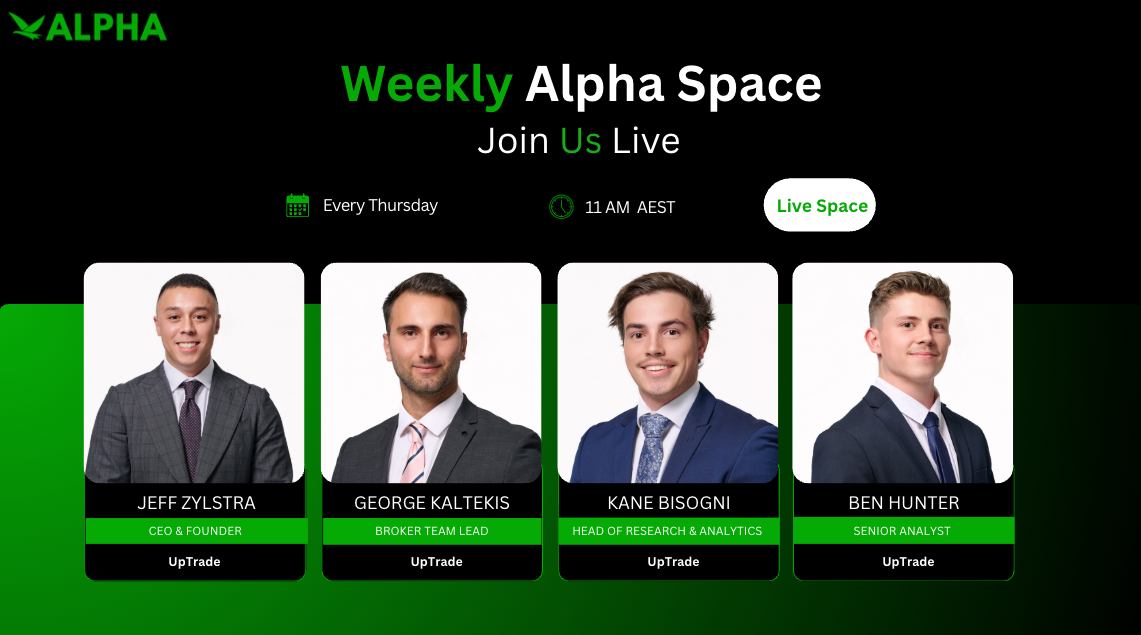
Join Us Live — Weekly Alpha Space
Every Thursday at 10AM Melbourne time, Jeff our CEO, George our broker lead, and Ben and Kane from the research team go live for our weekly market discussion. Think of it less like a formal webinar and more like pulling up a chair to an office conversation, candid market views, what we are watching, and what we are positioned in, all in real time. It is completely unscripted and open for you to jump in and ask questions. Join UpTrade Alpha to get access to the live session links every week. uptradealpha.com
Whop Brings DeFi Yield to 20 Million Users
Whop is one of the fastest growing merchant platforms on the internet, used by thousands of creators and businesses to sell digital products and services. Until now, money sitting in a merchant's account was just that, sitting there, doing nothing. That changes with Whop's new treasury integration powered by Plasma, Aave, and Tether. In simple terms, every dollar a merchant earns on Whop now automatically generates yield in the background through DeFi infrastructure, without the merchant needing to do anything differently. The money comes in, it gets put to work instantly via USDT and Aave's lending protocol, and the merchant earns a return on it, all seamlessly and in real time. It is the equivalent of your business account earning high-yield interest, but powered entirely by blockchain rails rather than a bank. Plasma is the infrastructure layer making this possible, and this is exactly the kind of real-world DeFi adoption that validates the thesis, not crypto for crypto's sake, but crypto solving a genuine problem for everyday businesses.
Inside Alpha — Follow the Portfolio in Real Time
UpTrade Alpha runs a live $250,000 trading portfolio, fully transparent, every trade posted in real time, exclusively for Alpha Pro members. The concept is to learn how institutions approach markets with full visibility into entries, exits, allocations, and the reasoning behind every decision. We currently hold five assets in the portfolio and are sitting green despite the volatility the broader market has thrown at us over the past few weeks. If you want to follow along, it is all inside UpTrade Alpha.

The TAO Rally Has Real Drivers. It Also Has a History.
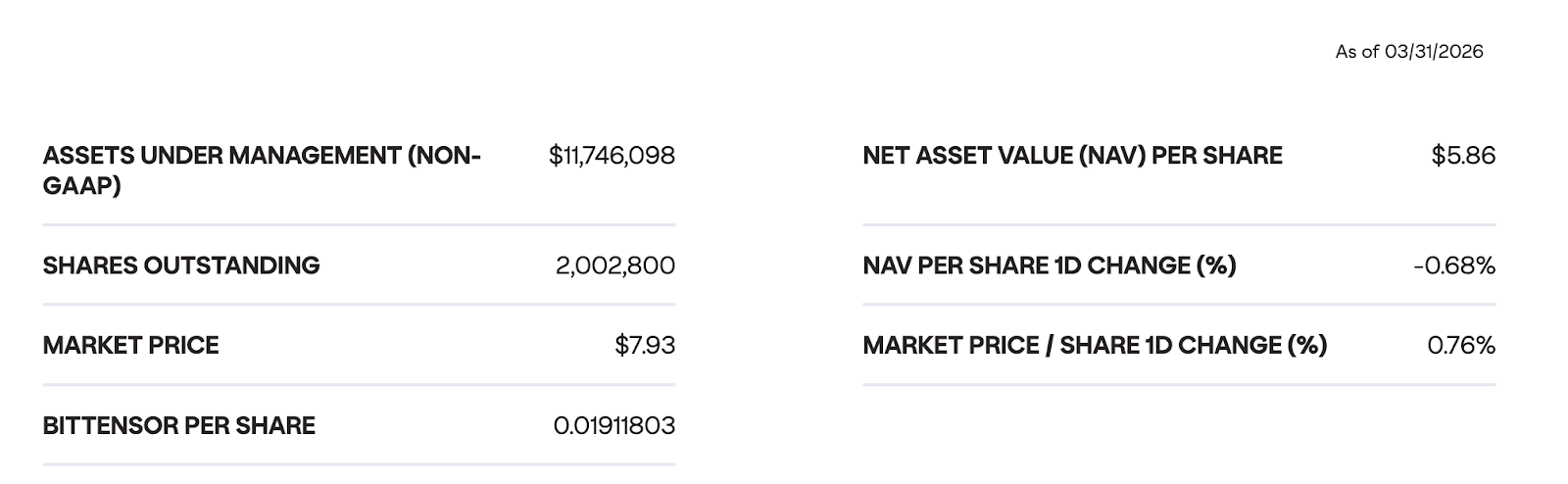
Three things are driving it: the Grayscale Trust trading at a premium, the AI narrative remaining one of the strongest tailwinds in markets, and the fact that the leading AI companies shaping the world right now are overwhelmingly private. TAO offers one of the few liquid, public ways to express a view on decentralised AI infrastructure. The Grayscale premium dynamic is the most important mechanic to understand here. As of March 31, the Grayscale TAO Trust shows a NAV per share of $5.86 against a market price of $7.93. That is a premium of roughly 35% above the underlying asset value. In plain terms, institutional investors are paying $7.93 to access something worth $5.86 simply because the trust is their only regulated entry point. That premium exists because access is scarce. When there is no ETF, the trust becomes the only vehicle, and institutions pay above NAV to get in.
History offers a useful warning. With GBTC, the trust traded at premiums as high as 40% for years. When the ETF conversion was eventually approved, the scarcity that justified the premium disappeared overnight. Arbitrage capital that had entered specifically to capture the premium began unwinding. Early trust investors sold into the announcement, the premium compressed rapidly into a discount, and the resulting outflow pressure weighed on price during a period when many expected a rally. Ethereum followed a near-identical pattern.
Grayscale has already filed an S-1 for a proposed NYSE Arca ETF listing for TAO, though SEC approval is not guaranteed. If approval comes, the same dynamic is in play. The investors who bought the trust at a 35% premium get their exit, the scarcity that justified that premium dissolves, and the token faces selling pressure from exactly the cohort that was previously the most visible source of institutional demand. Long term the fundamentals are building. TAO generated $43 million in revenue from AI customers in Q1 2026, with 75% of supply staked. But the path from here to there may run through a period of price suppression that catches a lot of late buyers off guard.
The Five-Day Pause, the Extension, and the Impossible Position
Trump's Truth Social post announcing a five-day pause on strikes against Iranian energy infrastructure briefly sent markets surging, with Bitcoin climbing above $71,000 and crude dropping sharply, before Iran denied the talks had taken place and gains partially reversed. As covered last week, that sequence played out within the span of an hour.
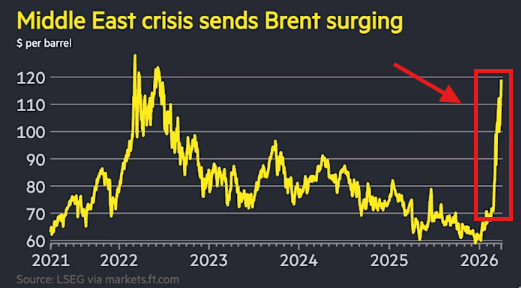
- Brent crude oil futures prices officially end March 2026 with a +60% gain, posting the largest monthly gain since the creation of the futures contract in 1988.
What followed was an extension. Trump pushed the deadline out by a further ten days to April 6, writing on Truth Social that "talks are ongoing and, despite erroneous statements to the contrary, they are going very well." The diplomatic picture is fractured but slowly moving. Iranian President Pezeshkian told the European Council his country had the "necessary will" to end the conflict, provided conditions were met and guarantees against future aggression were secured. Foreign Minister Araghchi went further, telling Al Jazeera that Iran seeks not a ceasefire but a complete end to the war, across the entire region.
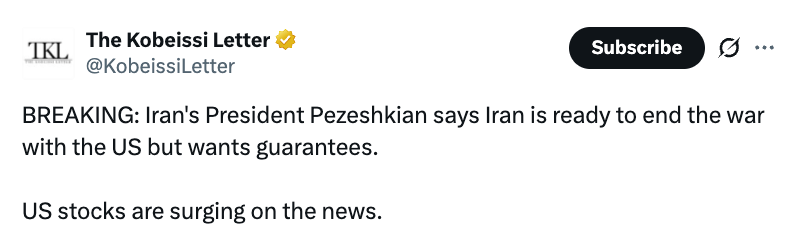
Markets are treating this as cautiously positive. The oil risk premium has eased from its $119 peak, but Hormuz remains closed, and every extension just resets the clock rather than resolving anything structural.There is an argument that the current administration sees this conflict as an opportunity to reassert American strength and restore a version of economic and geopolitical dominance that defined earlier eras. The post-World War Two boom is often held up as the clearest example of that model working, a period where American military strength translated into decades of domestic prosperity and global economic leadership. That playbook made sense in a world rebuilding from rubble, where the US held unchallenged industrial capacity and the dollar had just become the world's reserve anchor. The present reality looks considerably different. A conflict of this scale does not naturally produce the kind of economic expansion that model implies. The domestic population is already absorbing the consequences through rising fuel costs, supply chain pressure, and bond market stress. At some point the path forward involves a choice between two options that both carry a cost: an early resolution that some will frame as falling short of the original objective, or a prolonged engagement that continues to place pressure on the domestic economy. Neither is without consequence. But one of them ends sooner.
Ondo Finance Accelerates Tokenised Markets
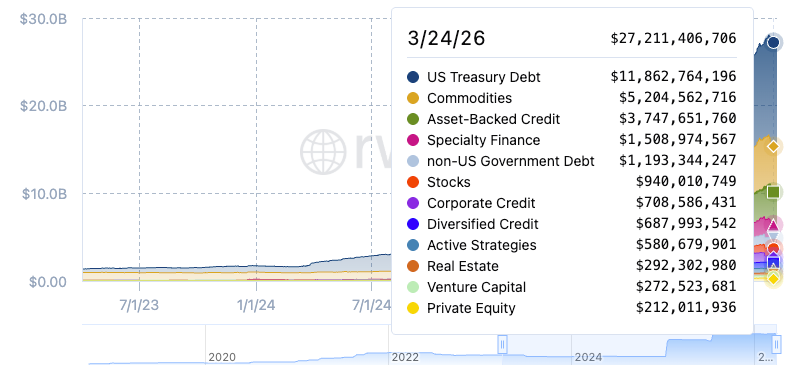
Ondo Finance has announced a partnership with Franklin Templeton to tokenise five ETFs covering growth equities, large-cap, fixed income, high yield, and gold through Ondo Global Markets, the largest asset manager to directly support on-chain distribution. The broader tokenised equity market stands at approximately $950 million as of March 2026, and Ondo controls roughly 70% of that, more than all competing platforms combined. The tokenised funds will trade 24/7 on blockchain rails, with tokens deployable in DeFi applications, used as collateral, or held directly in a crypto wallet without requiring a brokerage account. The infrastructure case for Ondo is becoming hard to argue against.
The token is a different conversation. ONDO currently has no direct value accrual mechanism, it does not capture fees, revenue, or governance rights that translate into economic returns. The business is growing quickly, but holding the token is not the same as having exposure to that growth. What you are really buying is a bet on whether Ondo eventually decides to give the token direct value accrual. That may happen, many protocols have retrofitted utility onto their tokens as the business matured, but until it does, the token trades on narrative rather than fundamentals. The business is institutional grade. The token is still a speculation on future design decisions.
Google Just Moved the Deadline for Quantum Computing Risks
On March 31, Google's Quantum AI team published a whitepaper showing that future quantum computers may break the elliptic curve cryptography protecting cryptocurrency with fewer qubits and gates than previously realised. The numbers are harder to dismiss than prior warnings. Cracking Bitcoin and Ethereum's cryptography could require fewer than 500,000 physical qubits, roughly a 20-fold reduction from earlier estimates. Google has set 2029 as its own internal migration deadline. That is three years away.
The attack model is what makes this particularly uncomfortable. Rather than targeting dormant wallets, a quantum attacker could intercept transactions in real time. When someone sends bitcoin, a public key is briefly exposed. A fast enough quantum computer could derive the private key and redirect the funds in roughly nine minutes, giving an attacker approximately a 41% chance of beating confirmation.
The wallets most at risk are the oldest ones, those using legacy address formats where the public key is permanently visible on-chain. Satoshi Nakamoto's holdings, estimated at approximately 1.1 million BTC or around 5% of total supply, sit in exactly these early address types and have never moved. If those coins were ever compromised under a quantum attack scenario, the psychological and market impact would extend well beyond the coins themselves.
It is also worth keeping perspective. If quantum computing reaches this capability, Bitcoin wallets will not be the only concern. Banking systems, military encryption, and the foundational infrastructure of the internet all rely on the same cryptographic standards. A world where quantum computers can break Bitcoin is a world with far larger problems than the price of BTC.
The crypto industry is not waiting passively. Ethereum developers have already launched an extensive post-quantum migration effort, with co-author of the Google paper Justin Drake directly involved in building the defence. For Bitcoin, the proposed solution is BIP 360, a protocol upgrade that would introduce quantum-resistant wallet formats and allow users to voluntarily migrate their funds to addresses secured by post-quantum cryptography. The transition requires coordination across a decentralised network, which is slower and more complex than a centralised system simply pushing an update. Google itself notes that the time remaining before a cryptographically relevant quantum computer arrives still exceeds the time needed to migrate, but stresses that margin is increasingly narrow. The threat is not imminent. But this week, it got meaningfully closer.
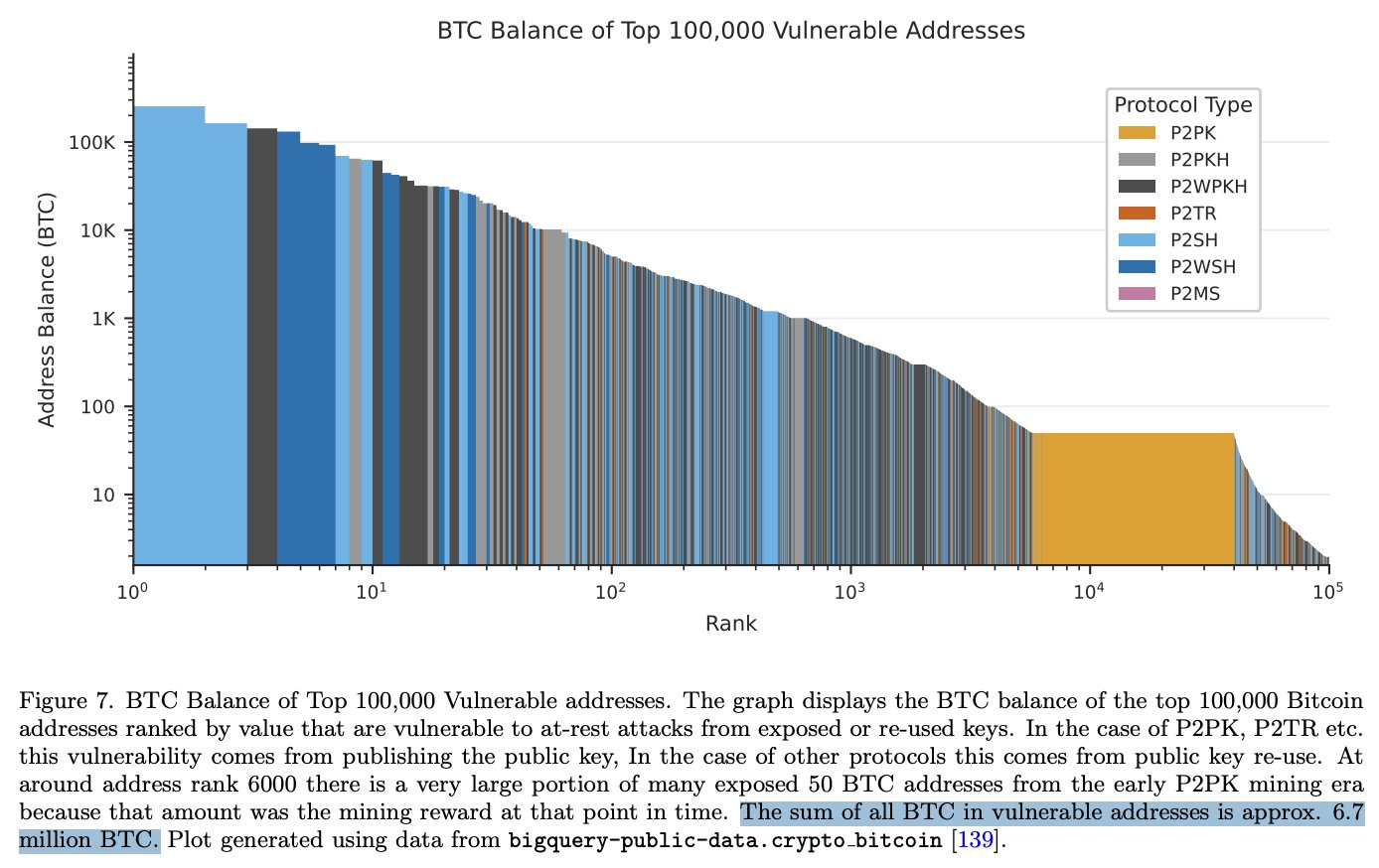
- Approximately 6.7 million BTC, around 32% of circulating supply, sits in old address formats where the public key is permanently exposed on-chain, making them theoretically vulnerable to a sufficiently powerful quantum computer.
General information only. This article is for educational purposes and does not constitute financial, investment, legal or tax advice, nor a recommendation to buy, sell or hold any asset. Cryptocurrency is a high-risk asset and you should consider your own circumstances and seek independent advice before making any decision. Uptrade does not make price predictions.
Kane leads our international research division, delivering clear, actionable insights into crypto markets and emerging investment opportunities. A true “crypto native,” he has over seven years of hands-on experience, formal qualifications in finance and economics, and has worked across Web3 hedge funds, venture capital, and leading incubators.
View all articles by Kane