

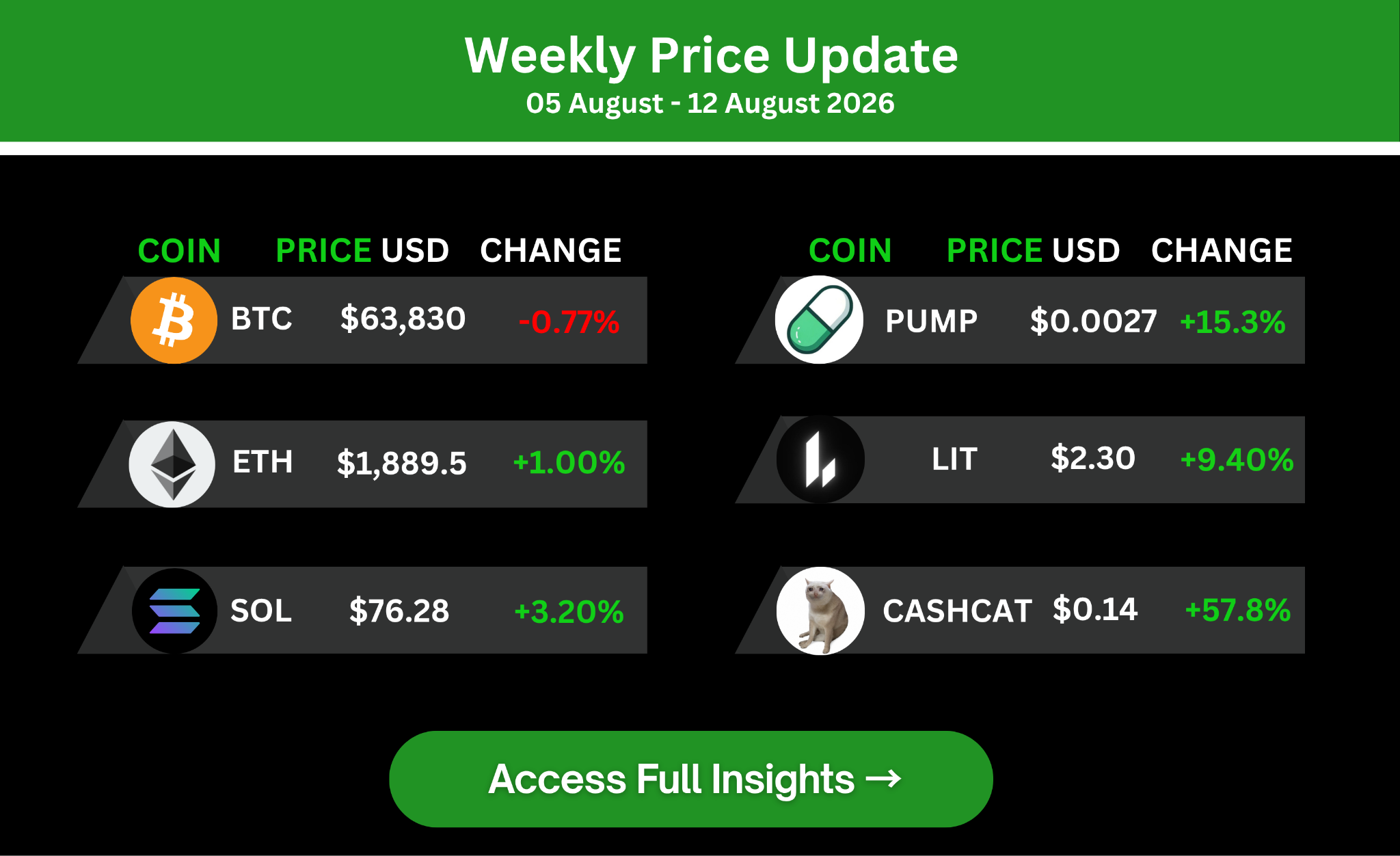
It has been another steady week in the crypto market, with all the majors ranging between a -5% and 3% move. Bitcoin consolidated between $63k and $65k, while XRP was the biggest loser in the top 10, down 4.8% as it held onto its key $1 psychological level. Despite the news that Saylor again sold from his Bitcoin stack, which had no real price impact on the market, and the Clarity Act stalling past the August recess, it was a strong week and a genuine sign of resilience for the market.
We also saw strong ETF flows return for both BTC and ETH, and notably, predictions for the FOMC's next rate decision shifted vastly following fresh jobs data. The probability of no change has now climbed to 62%, surpassing earlier expectations of a hike. Just last week the market was pricing a 54% chance of a hike, whereas that has now fallen to 39%.
Members of UpTrade Alpha will recognise this simple Bitcoin technical structure we've been tracking for months now. We're clearly in a downtrend, with lower lows and lower highs, punctuated by rejections along a descending trendline. That picture has become increasingly important to watch over the past couple of weeks as we approach a decisive point.
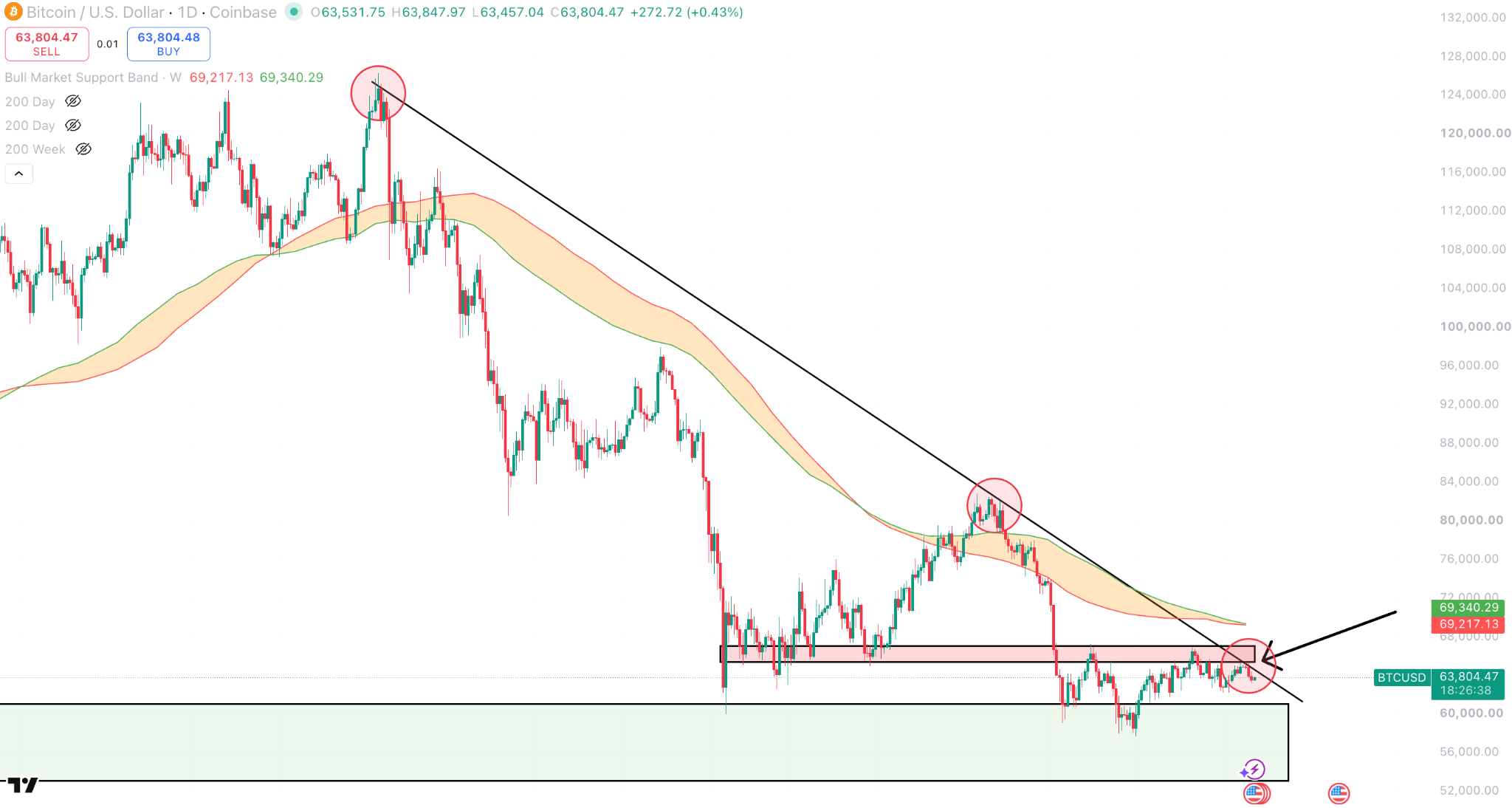
Bitcoin is now facing three short-term resistances, and a break through all three is what we've been waiting for to confirm a true trend reversal. First, the descending trendline, which rejected price for the third time this week. Second, the 65–66k level, formerly support and now flipped to resistance. And third, the Bull Market Support Band.
We've stayed patient with our view here. We need Bitcoin to push through all three of these levels before we have any real confidence in a trend reversal, and the structure is now really starting to compress. That compression is exactly why the coming weeks are so important, the tighter it coils, the more decisive the eventual break in either direction tends to be.
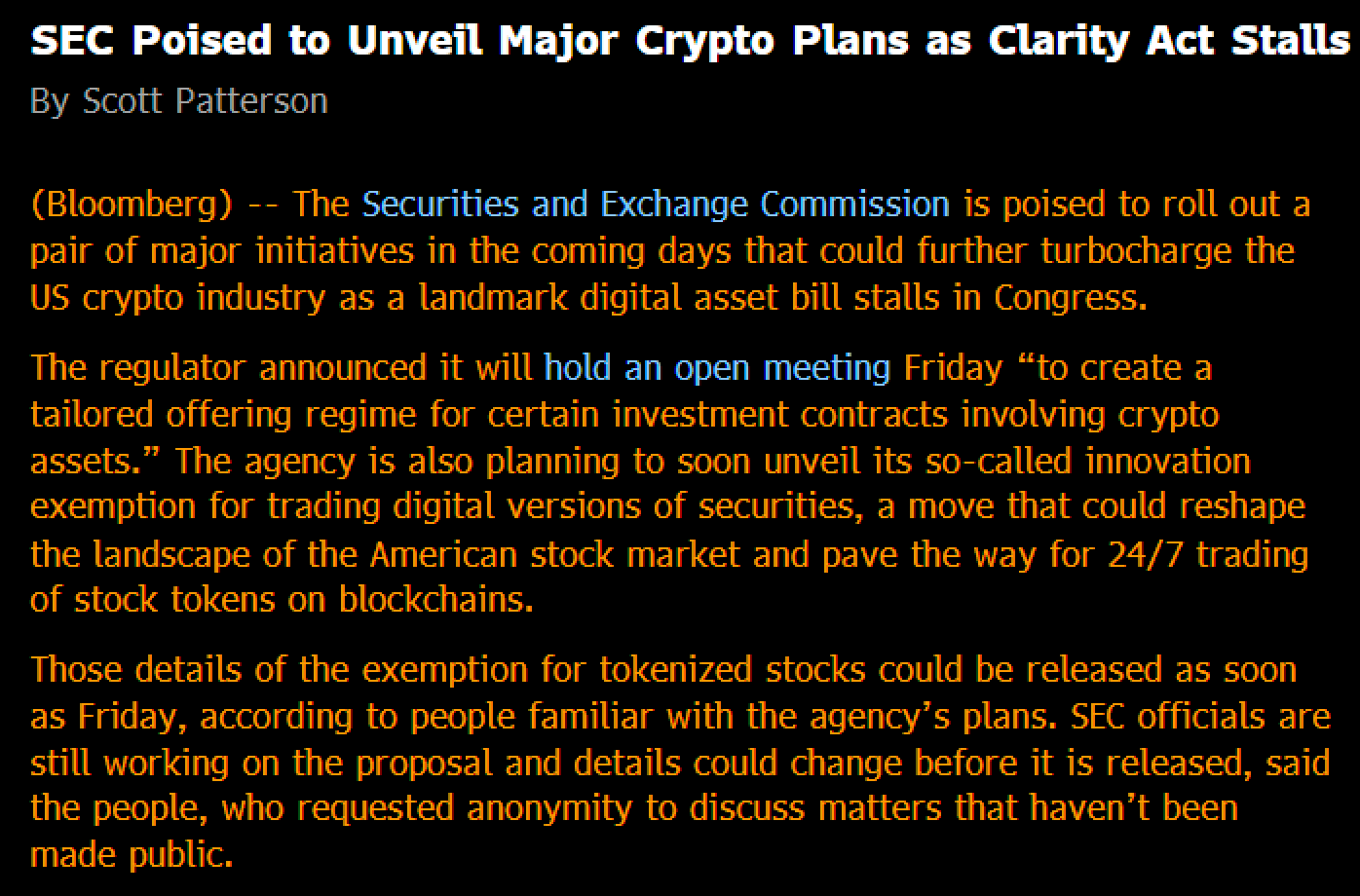
The Senate has finally scheduled a vote on the Clarity Act for Tuesday, September 15, giving the long-awaited market structure bill a concrete date after months of delays and its stall before the August recess. That alone is a meaningful step forward. But the more interesting development is what's happening at the SEC, because it's no longer waiting on Congress. The agency has scheduled an open meeting for Friday, August 14, to propose what's being called "Regulation Crypto", a tailored framework for crypto offerings that could replace outdated securities rules with fit for purpose ones. It would create a legal path for crypto firms to raise capital without triggering the full weight of SEC registration, through streamlined disclosures, safe harbours and registration exemptions. On the same day, the SEC could also unveil an "innovation exemption" for tokenised securities, potentially opening the door to 24/7 blockchain-based trading of tokenised stocks.
For months the entire market has been fixated on the Clarity Act as the single catalyst, but the SEC moving independently, and potentially faster, is arguably the bigger story. With both the SEC and CFTC now actively building out their own clarity frameworks, the US is advancing crypto regulation on multiple fronts at once, rather than relying on one bill squeezing through a gridlocked Congress. That reduces the single point of failure the market has been so nervous about. And the tokenised securities angle ties directly into a catalyst and narrative we have been big on all year, the infrastructure for tokenised stocks and real-world assets is being built out in real time, and clear rules are exactly the unlock that lets it scale. If these initiatives land, the regulatory tailwind for the RWA and tokenisation narrative gets a lot stronger, regardless of what happens with Clarity in September.
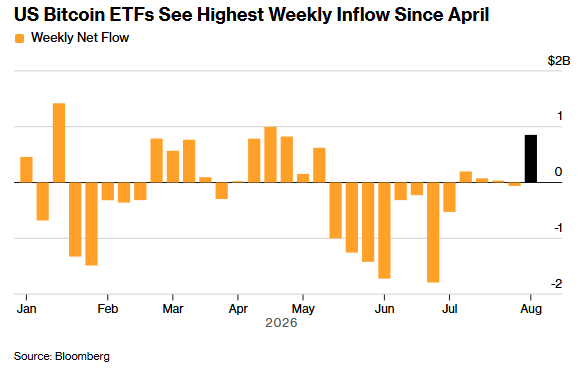
US-listed Bitcoin ETFs put together a strong inflow streak from the 3rd to the 7th, pulling in more than 850 million USD, their best week since April, with some of that demand likely spurred by the 130 million USD Coldcard wallet hack pushing holders toward regulated custody.
That trend, however, has already been bucked. The inflows have quickly reversed into outflows, with BlackRock moving around 77 million USD of Bitcoin and Ethereum back onto Coinbase and the ETFs seeing 144 million USD leave on Monday, flipping a run of green days straight back to red. Honestly, this is exactly what an indecisive market looks like, strong inflows one week reversing into outflows the next. It reflects the broader uncertainty right now, with investors lacking firm conviction in either direction and reacting quickly to every shift in sentiment. Until that conviction returns, this kind of choppy, back-and-forth flow is likely to continue.
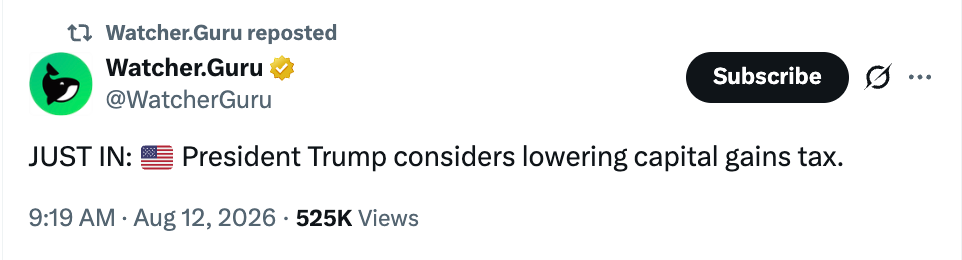
This one is very fresh and unlikely to happen quickly, but it's interesting, headlines just broke today from Bloomberg that President Trump is weighing a cut to capital gains taxes ahead of the midterms. For context, there hasn't been a major cut to capital gains tax rates in the US since 2003, so even the discussion is notable. The news is centred on the idea of "indexing" capital gains to inflation. This would mean you'd only be taxed on your real gain after adjusting for inflation, rather than the full nominal gain. For example, if you bought an asset for $100,000 and sold it years later for $200,000, today you'd owe tax on the entire $100,000 gain. Under inflation indexing, if cumulative inflation over that period was 20%, your cost basis would effectively rise to $120,000, meaning you'd only be taxed on the $80,000 of "real" gain. The logic being pushed in Washington is simple, the government should stop taxing inflation as if it were profit. There's also talk of exemptions for home sales up to $2 million. The big caveat is that this faces serious hurdles. A 1992 Justice Department opinion concluded that the Treasury can't redefine an asset's cost basis this way without Congress, so any attempt to do it via executive action would be challenged immediately. So realistically, quick action is unlikely, and this is more of a wildcard on the radar than an imminent change.
If something like this did get through, the implications for risk assets would be significant, and history gives us a rough guide. The last comparable move was the 2003 capital gains tax cut under Bush, which lowered the top rate from 20% to 15%. In the twelve months that followed, the S&P 500 rallied strongly as the reduced tax burden encouraged investment and risk-taking. When you let people keep more of their gains, you incentivise capital to flow into assets rather than sit on the sidelines.
For crypto specifically, the effect could be even more pronounced. Crypto sits right at the high-risk, high-growth end of the risk curve, and it's exactly the kind of asset that benefits most when investors are rewarded for taking risk and holding through volatility. Inflation indexing in particular would reward long-term holders, which aligns almost perfectly with the "hold through the cycle" behaviour that crypto rewards anyway. Reducing the tax friction on realising gains could pull fresh capital into the space and encourage existing holders to stay invested longer.
For businesses and founders, it would change the economics of building and selling. Lower capital gains tax makes exits more attractive, encourages entrepreneurship and risk capital, and tends to free up money that gets recycled back into new ventures and investments, a genuine pro-growth tailwind. The honest caveat again, this is all hypothetical. It faces real legal and legislative hurdles, quick action is unlikely, and there's a live debate about whether it's genuinely pro-growth or simply a benefit skewed toward the wealthy. But if it ever did materialise, it would be a meaningful tailwind for exactly the kind of risk assets we focus on, which is why it's worth keeping on the radar even at this early, speculative stage.
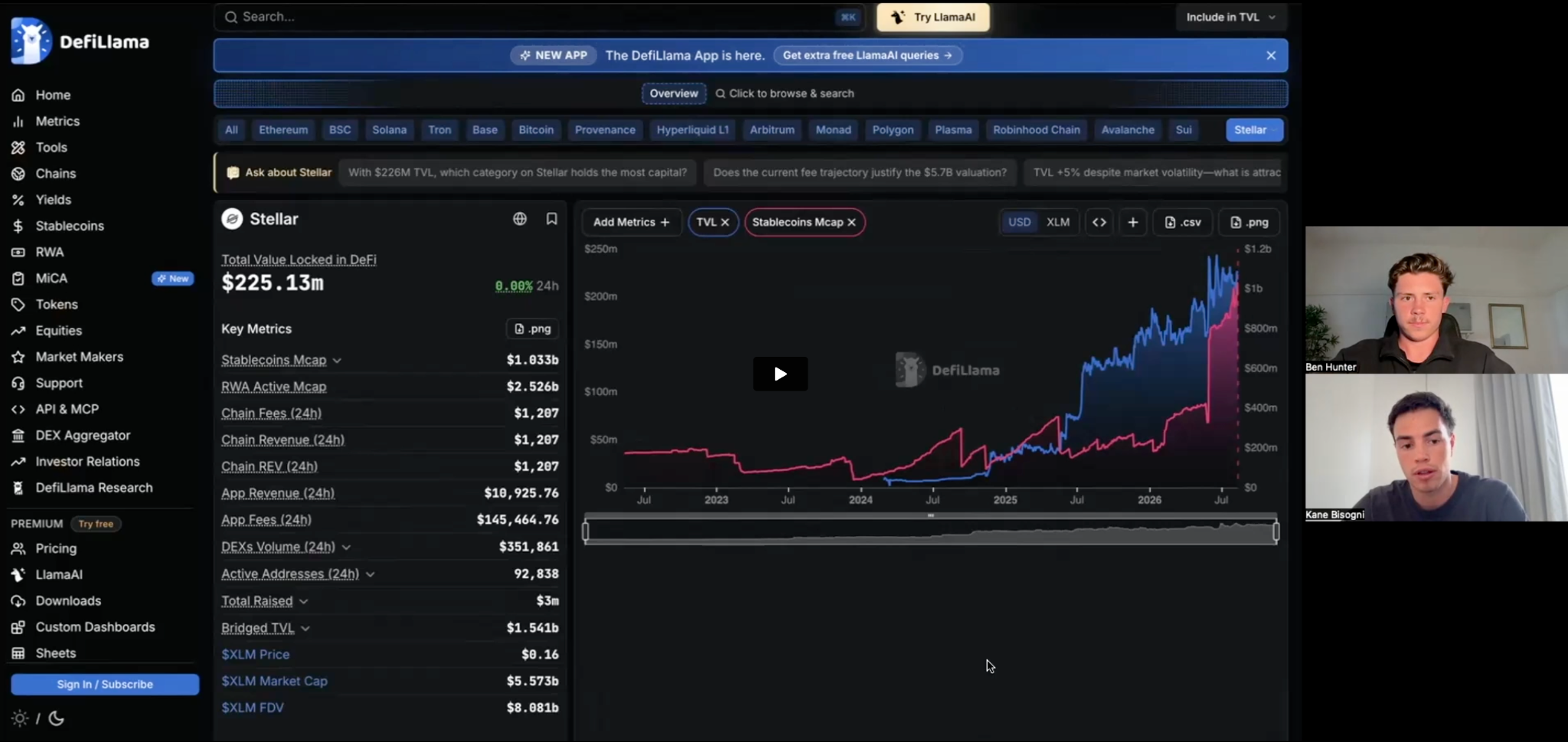
This week we published an in-depth video breaking down three of the most widely held tokens in the market, and it's a must-watch for any XRP, HBAR or XLM holder.
In it, we dive deep into the charts and fundamentals for each, outlining where the potential bottoms sit, the current market structure, and the price outlook from here. We then break down whether the fundamentals are genuinely shaping up for strong growth, or if the picture is more mixed for each of the three. Watch it now at uptradealpha.com
General information only. This article is for educational purposes and does not constitute financial, investment, legal or tax advice, nor a recommendation to buy, sell or hold any asset. Cryptocurrency is a high-risk asset and you should consider your own circumstances and seek independent advice before making any decision. UpTrade does not make price predictions.

Market updates, new explainers and the occasional Alpha Pro report, sent once a week. Unsubscribe anytime.