

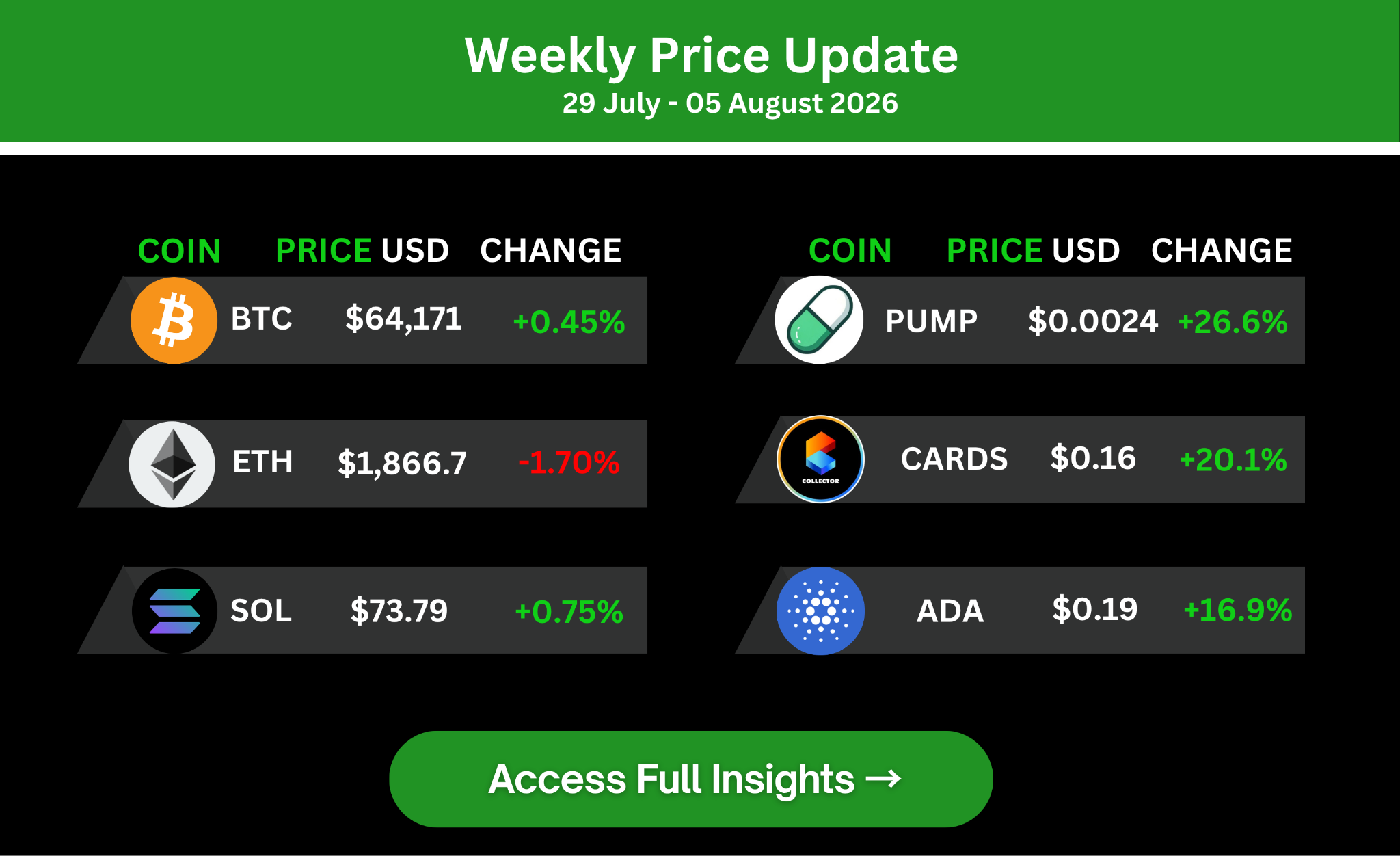
It's been a heavy week for headlines once again, yet the market has shown its resilience. A devastating exploit rocked one of the most trusted names in Bitcoin cold storage, the Federal Reserve delivered its most divided decision in years, and the Clarity Act stalled at the final hurdle before the Senate's recess. Any one of these could have sparked a serious risk-off move, yet Bitcoin and the broader market have held their ground impressively.
Beneath the noise, the bigger picture remains intact. The demand for regulatory clarity hasn't gone anywhere, real fundamentals continue to separate the strong projects from the weak, and the setup we keep coming back to, positioning through the fear rather than the euphoria, has only strengthened. There's a lot to unpack this week, so let's get into it.
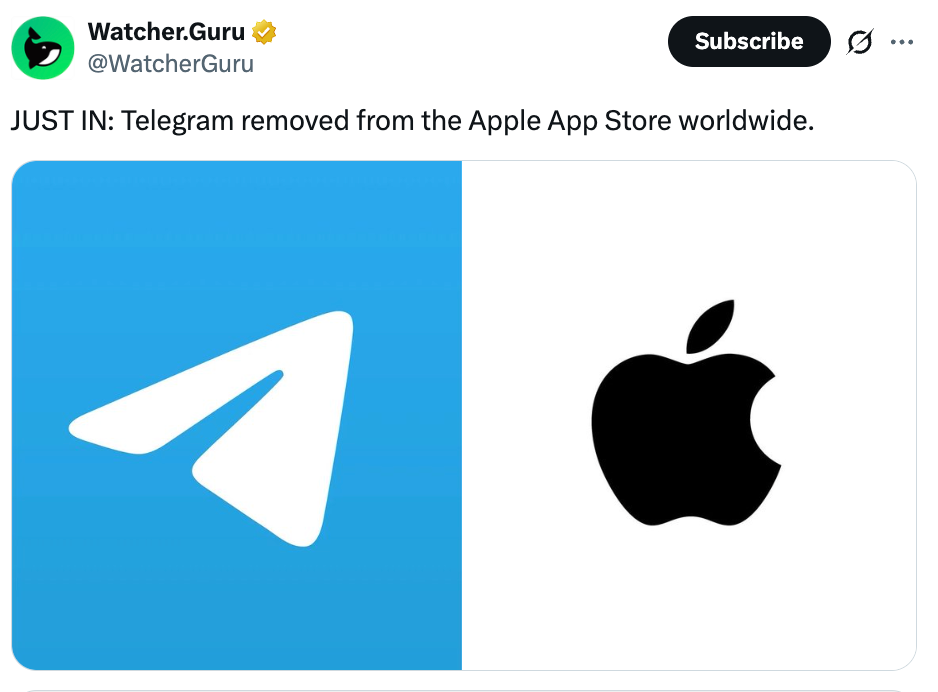
Telegram disappeared from Apple's App Store worldwide today with new downloads blocked globally while existing installs kept working. GRAM, the Telegram-linked token formerly known as TON, fell roughly 8% on the news.
The reason has since been confirmed. Apple removed the app after finding child abuse material on the platform, a direct violation of App Store policy. Telegram removed the content, banned the account responsible, and added further safeguards. The app was restored within hours and GRAM recovered.
This is not a first. Apple pulled Telegram in 2018 over similar moderation concerns. In June, it was delisted in India over exam paper leaks. Founder Pavel Durov has faced criminal investigation in France relating to the platform's moderation practices. The market reaction was brief, but the structural point stands. Telegram is where crypto trading groups coordinate, where projects run communities, and where TON-based wallets reach over 900 million users. GRAM's value is directly tied to that distribution, which depends on Telegram staying compliant with two app stores controlled by two companies.
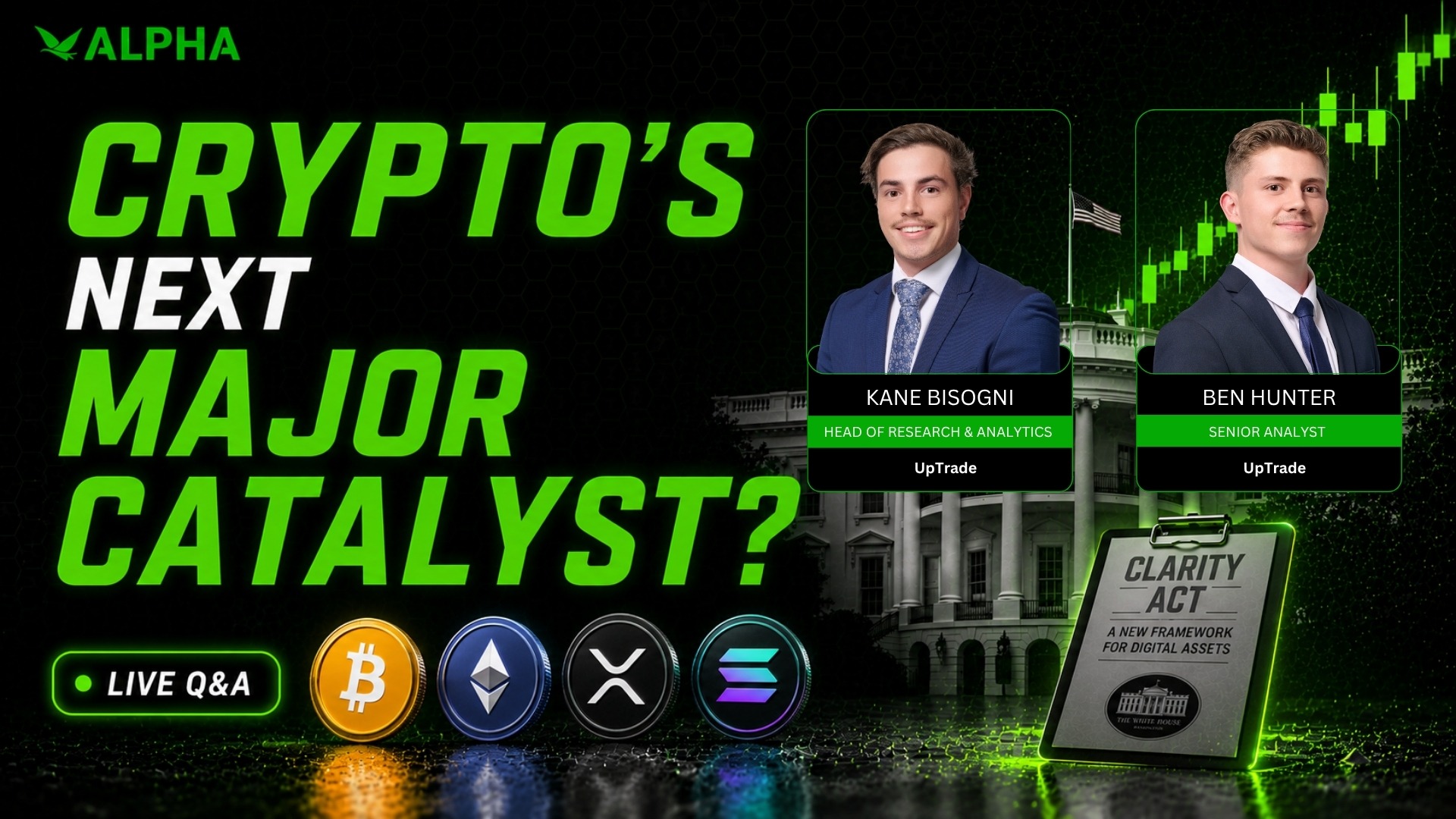
We recorded a new live session today, and it's available to watch inside Uptrade Alpha. Kane and Ben break down one of the biggest developments shaping the market right now, the Clarity Act and evolving US crypto regulation, digging into whether it could become crypto's next major catalyst and what it means for select tokens. The session moves into current market structure, the key support and resistance levels we're watching, emerging narratives, and the sectors we think are best positioned in the weeks ahead. We close it out with a live Q&A. It's one of our most valuable sessions yet, and a must-watch for anyone wanting to understand where the market goes from here.
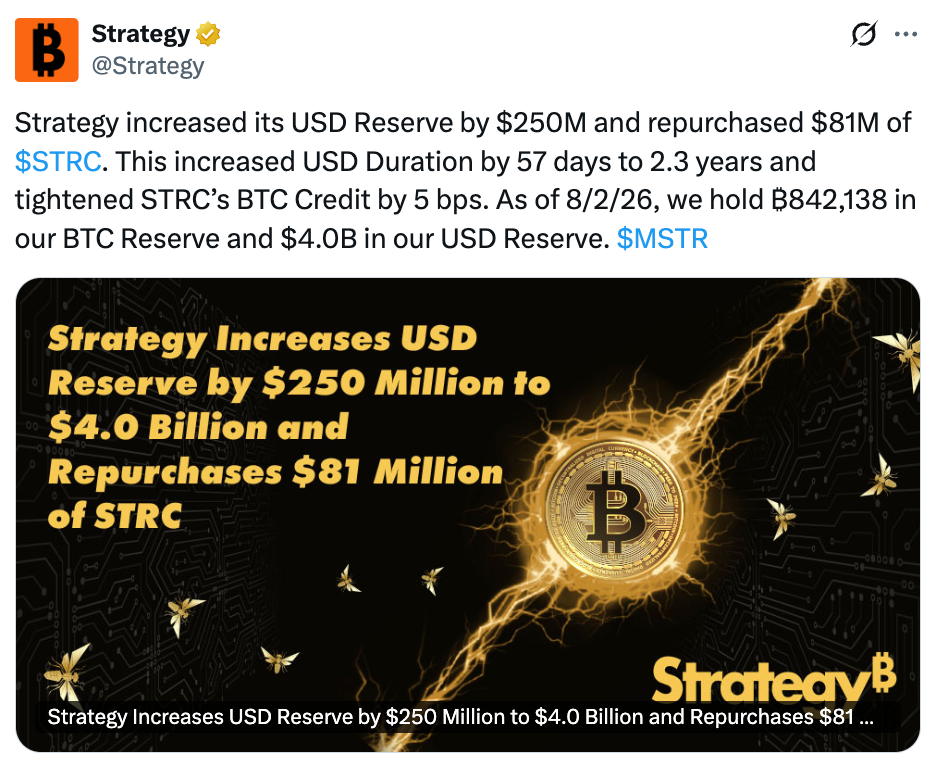
Strategy sold 1,638 BTC for $104.7 million between July 27 and August 2, its fourth sale this year. Of the proceeds, $52.4 million funded dividend payments on its STRC preferred stock and $52.3 million went toward repurchasing STRC shares. None went toward new Bitcoin. Holdings now stand at 842,138 BTC.
Two details stand out. The sale price averaged $63,957 per coin against an average acquisition cost of $75,419, a realised loss of more than $11,000 per Bitcoin. And the scale: 2026 disposals now total 5,258 BTC, the most in any year since Strategy began accumulating in 2020, with the acquisition pause now stretching six weeks.
Alongside the sale, Strategy raised $290.6 million issuing MSTR shares, adding $250 million to its USD reserve, now at $4 billion. Common shareholders supplied roughly 73.5% of last week's financing. The equity engine that once funded Bitcoin accumulation is now supporting the preferred stack and cash reserve. CEO Phong Le framed the STRC buybacks as retiring future dividend obligations at a discount. The logic holds, but the roughly $10.9 million annual saving is small against Strategy's estimated $1.76 billion in yearly financing commitments. The reserve build is doing the heavier lifting, now covering around 27 months of obligations.
The FOMC held interest rates steady at 3.50–3.75% at its recent meeting, marking the fifth straight hold and the longest pause since 2008. On the surface that was the expected outcome, but the details told a more interesting story. The decision came on a divided 9-3 vote, with three members dissenting in favour of a rate hike, the first time since 2016 that three policymakers have broken ranks in the same direction, telling you the committee is far more divided on inflation than the headline suggests. New Fed Chair Kevin Warsh continued his notably different approach, sticking to a "just the facts" statement and once again declining to offer forward guidance, telling markets they need to "learn to play the ball, not the referee." This removes a comfort blanket investors had grown used to under Powell and introduces more genuine volatility around every meeting and data point.
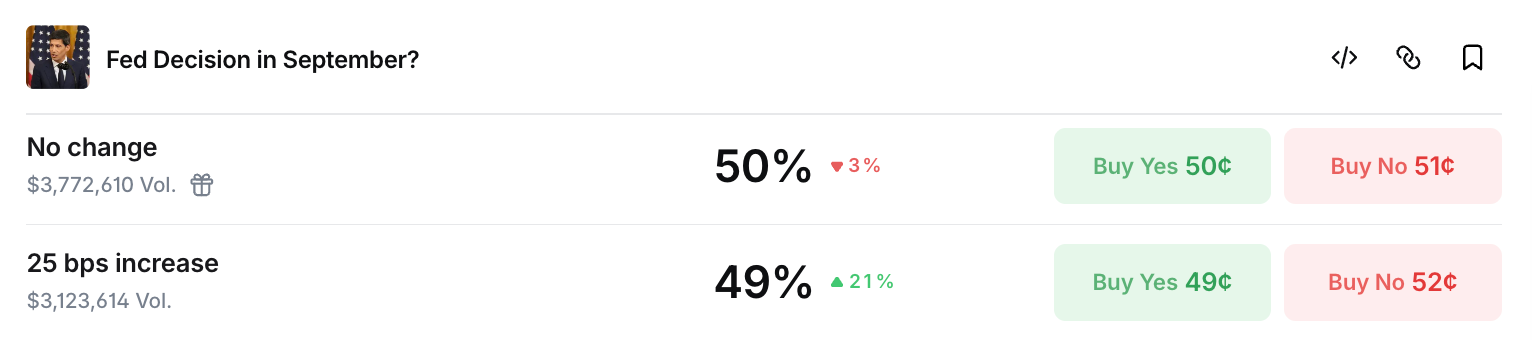
Markets read it as the Fed falling behind on inflation, and the reaction was sharp, long-dated Treasury yields jumped, the Nasdaq slid into correction territory, and the Dow posted its worst day since April 2025. In fact, moments before the decision, Polymarket still had the odds of a hike at 30%, a level of uncertainty right up to the wire that almost never happened under Powell. Much of the pressure is coming from energy, with crude up more than 20% through July on the Iran conflict, keeping headline inflation elevated. Looking ahead, prediction markets are now pricing the next meeting at a 49% chance to bring a hike.
One of the biggest stories in crypto this week has been the exploit of Coldcard, one of the most popular hardware wallets for long-term Bitcoin holders, where cold storage wallets were hacked and drained. Over the past week, attackers have taken roughly $116 million worth of Bitcoin across more than 5,200 addresses.
Here's what happened in simple terms. When you set up a wallet, it creates a secret recovery phrase (your "seed") that controls all your funds, and for that to be safe, it has to be generated completely at random. Coldcard is open source, meaning anyone can view its code, and an exploiter discovered a firmware bug introduced back in March 2021 where affected devices weren't actually generating those phrases randomly. Instead of using the device's proper hardware randomness, they fell back on a predictable software-based method, which dramatically shrank the number of possible combinations. Because the phrases weren't truly random, attackers could essentially work backwards and recreate them, draining wallets remotely without ever needing to physically touch the device.
What makes this so devastating is who it's hit. The victims are largely long-term holders who did everything right, keeping their keys in offline cold storage, believing they were completely safe. It's a stark and painful reminder that in this space, security is never something to take for granted. Encouragingly, Bitcoin's price has held up well through the news, but the reputational hit to hardware wallets, and the human cost to those affected, has been significant.

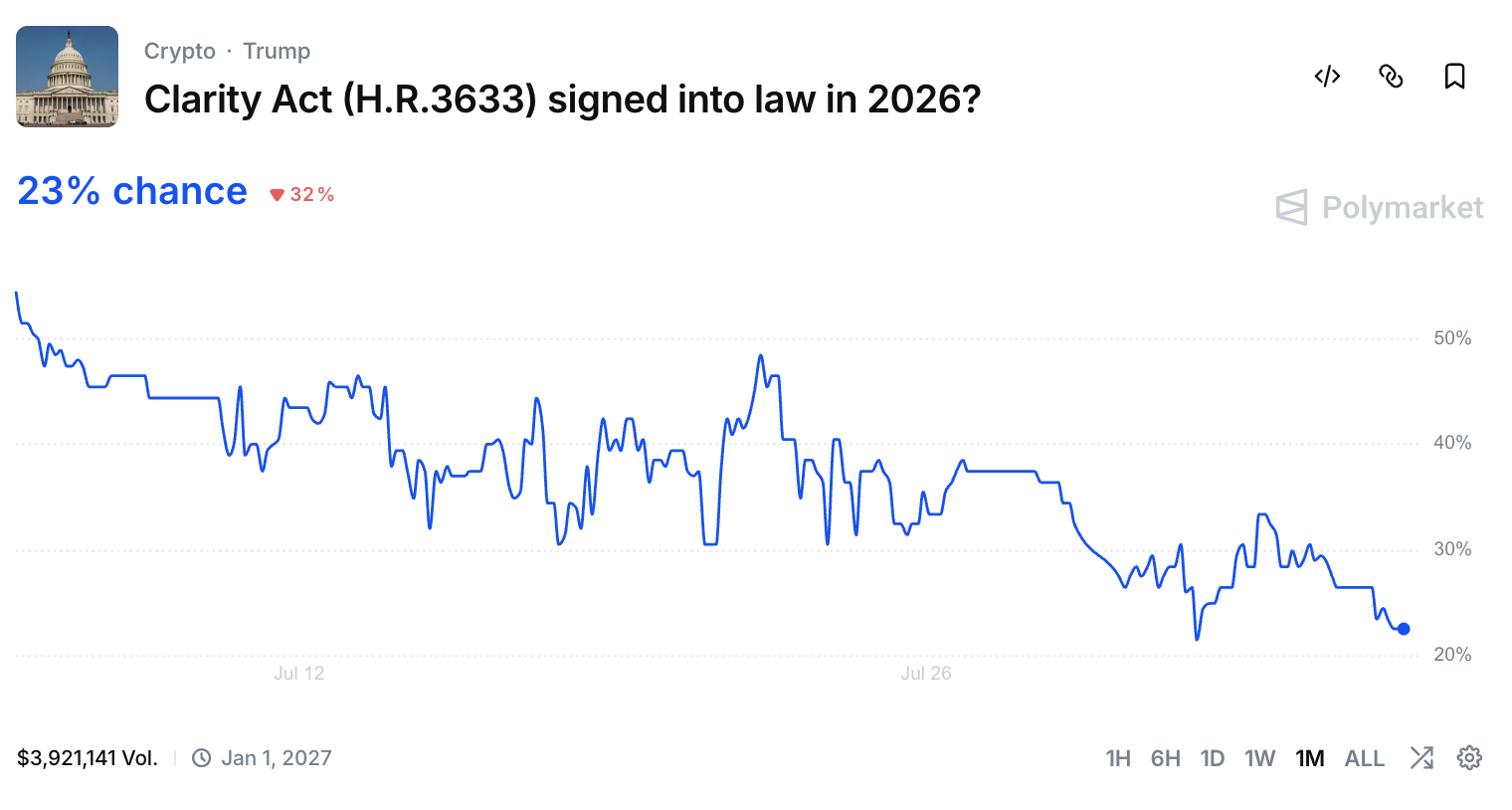
The Clarity Act, the major US bill that would finally define crypto regulation by splitting oversight between the CFTC and SEC, has stalled in a last bid to get voted on this week. Despite momentum and a real push to get it through before the Senate's August recess, lawmakers are favoured to leave Washington without holding a floor vote, meaning the bill now can't be taken up again until the Senate returns in mid-September. That delay matters more than it sounds. Once back, attention shifts quickly toward the midterm elections, and a complex, politically sensitive bill like this risks being pushed to the back of the queue, with the possibility it slips into 2027 entirely. The frustrating part is that this isn't a lack of support, in fact some of the biggest names in finance rallied behind it in the final days, including SEC Chair Paul Atkins, Goldman Sachs, BlackRock, Fidelity and Franklin Templeton. It's purely a timing and political problem. While the delay is a disappointment for a market that sees regulatory clarity as one of its most important catalysts, it's worth remembering the demand from institutions hasn't gone anywhere, and every week gives them more time to prepare to move the moment the rules are finally set.
General information only. This article is for educational purposes and does not constitute financial, investment, legal or tax advice, nor a recommendation to buy, sell or hold any asset. Cryptocurrency is a high-risk asset and you should consider your own circumstances and seek independent advice before making any decision. UpTrade does not make price predictions.

Market updates, new explainers and the occasional Alpha Pro report, sent once a week. Unsubscribe anytime.